
Bear damage
Cause and general information
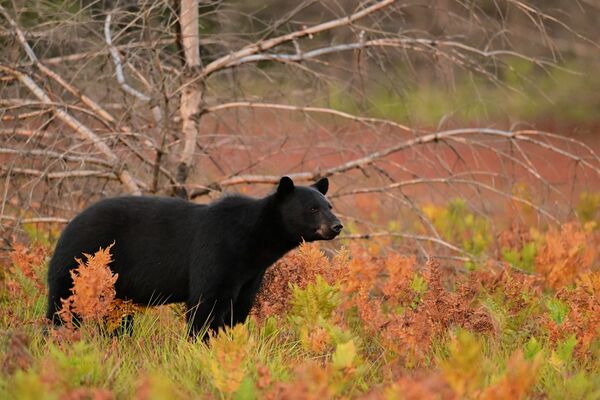
Black bear (Ursus americanus Pallas) and grizzly bear (U. arctos L.) are omnivores with a wide range of foods in their diets. Bears occasionally cause large wounds on conifers and broadleaf trees when rubbing or marking, or when stripping bark in early spring for food when other food resources are scarce. The latter activity can result in the death of the tree. Damage is often scattered, and not all bear populations engage in the latter behaviour because of regional differences in the types and availability of various food sources that bears can utilize. Black bears occasionally damage fruit trees (e.g., apples [Malus] and cherries and plums [Prunus]) when feeding on fruit in the late summer and fall. They also feed on the fruit of American mountain-ash (Sorbus americana) and the nuts of beech (Fagus) and oak (Quercus) in eastern Canada. Grizzly bears are known to feed on the seeds of whitebark pine (Pinus albicaulis).
Distribution and species affected
Black bears are found in forested areas and dense brush in every province and territory, from coast to coast. There are an estimated 380,000 black bears in Canada. In British Columbia, young, closed-canopy Douglas-fir (Pseudotsuga menziesii) forests suffer the highest levels of damage, but bears also favour coastal western redcedar (Thuja plicata) on the Pacific coast. Commercially thinned stands are especially vulnerable to bear damage because their increased growth provides a greater sugar content to the feeding bears. Conifer species throughout Canada are occasionally damaged by bear feeding, and fruit orchard trees are susceptible to branch breakage caused by bears accessing fruit.
Grizzly bears are a western Canadian species that at one time ranged as far east as the eastern boundary of Manitoba. Their current range is more restricted and includes British Columbia, western and northern Alberta, northern Saskatchewan, northern Manitoba, the Yukon, Nunavut, and the Northwest Territories. There are an estimated 20,000 grizzly bears in Canada.
Tree parts affected
Trunks of conifer and broadleaf trees. Branches and fruit of fruit-bearing trees.
Symptoms and signs
Conifers in western Canada are usually damaged in the early spring after bears emerge from hibernation and seek a source of nutrition. In some regions, the sapwood of conifers (soft, sweet wood under the bark) is one of the few available food sources during that time of year.
Signs of bear activity are hard to miss because they cause severe damage to trees in second-growth forests by tearing shreds of bark with their claws and then using their incisor teeth to feed on sapwood. Bears will also claw trees to mark their territory. The ribbon-like bark shreds, usually torn from the bottom 1 to 2 metres of the tree can measure more than a metre long and litter the ground at the base of the attacked trees. The exposed sapwood has long grooves caused by the bear’s teeth during feeding or the bear’s claws during marking.
In snow or soft ground, bear tracks may be observed near fresh damage. Black bear pawprints are relatively large, with claw marks visible at the ends of the toes. The front pawprints are oval and about 9.1 centimetres wide × 11.5 centimetres long, whereas the rear pawprints look similar in shape to a human foot and are about 9 centimetres wide × 18 centimetres long. Grizzly bear pawprints are similar to those of black bears but larger. The front pawprints are about 13.8 centimetres wide × 13.0 centimetres long, whereas the rear pawprints are about 13.8 centimetres wide × 25.0 centimetres long.
In urban and agricultural areas with individual fruit trees or fruit orchards, bears can cause considerable aesthetic and economic damage by climbing trees to obtain fruit, damaging the bark on trunks and breaking branches in the process.
Damage
Damage from bark stripping is highest in managed Douglas-fir stands in British Columbia, although bear damage can also be occasionally found on a variety of conifers throughout Canada.
One Douglas-fir stand in the Pacific Northwest was surveyed for bear damage and a 17% cumulative mortality rate was observed for partially girdled Douglas-fir during a 16-year period. Surviving trees were shown to produce a reduced timber volume due to deformity and decay. Another study observed incidence of trunk damage ranging from 8.5 to 42.0% in managed Douglas-fir plantations in Washington and Oregon.
Damage to the crowns of fruit trees can be severe depending on the both the size of the fruit tree and the individual bear. Fruit trees and orchards near higher bear populations are damaged more often.
Long-term damage from bear wounds (whether from rubbing, marking, or feeding on bark or fruit) in surviving trees includes decay caused by the introduction of heart rot fungi. This decay reduces the value of wood products produced from these trees when they reach harvestable age or makes the trees susceptible to further damage from breakage. However, cavity-nesting animals in forests benefit from the decayed and damaged trees, which provide nesting and roosting habitat for many species.
Prevention and management
Electric fences around high-value trees and orchards may protect them from bear damage.
Photos
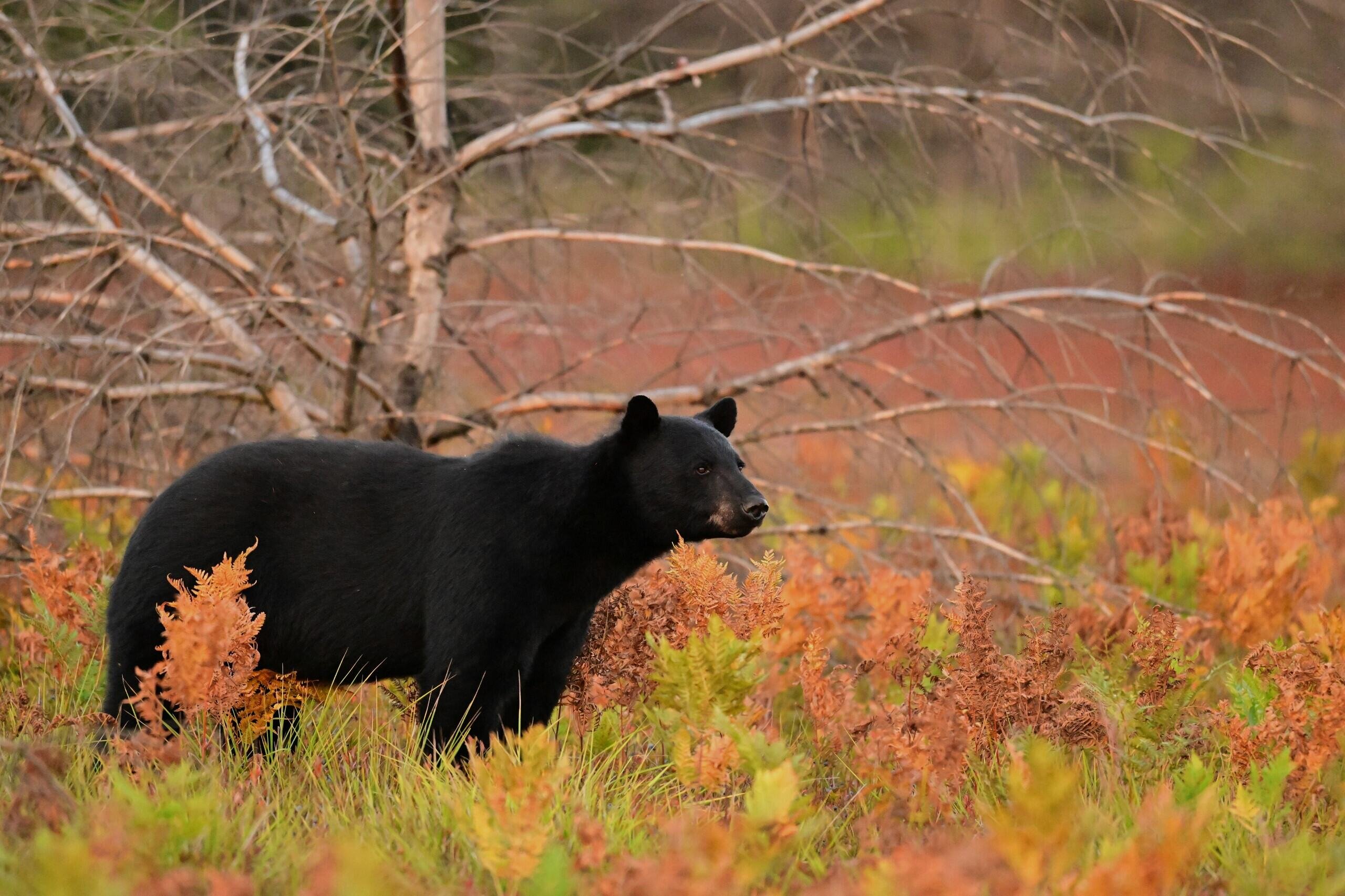
A black bear (Ursus americanus).
iStock.com/Carol Hamilton
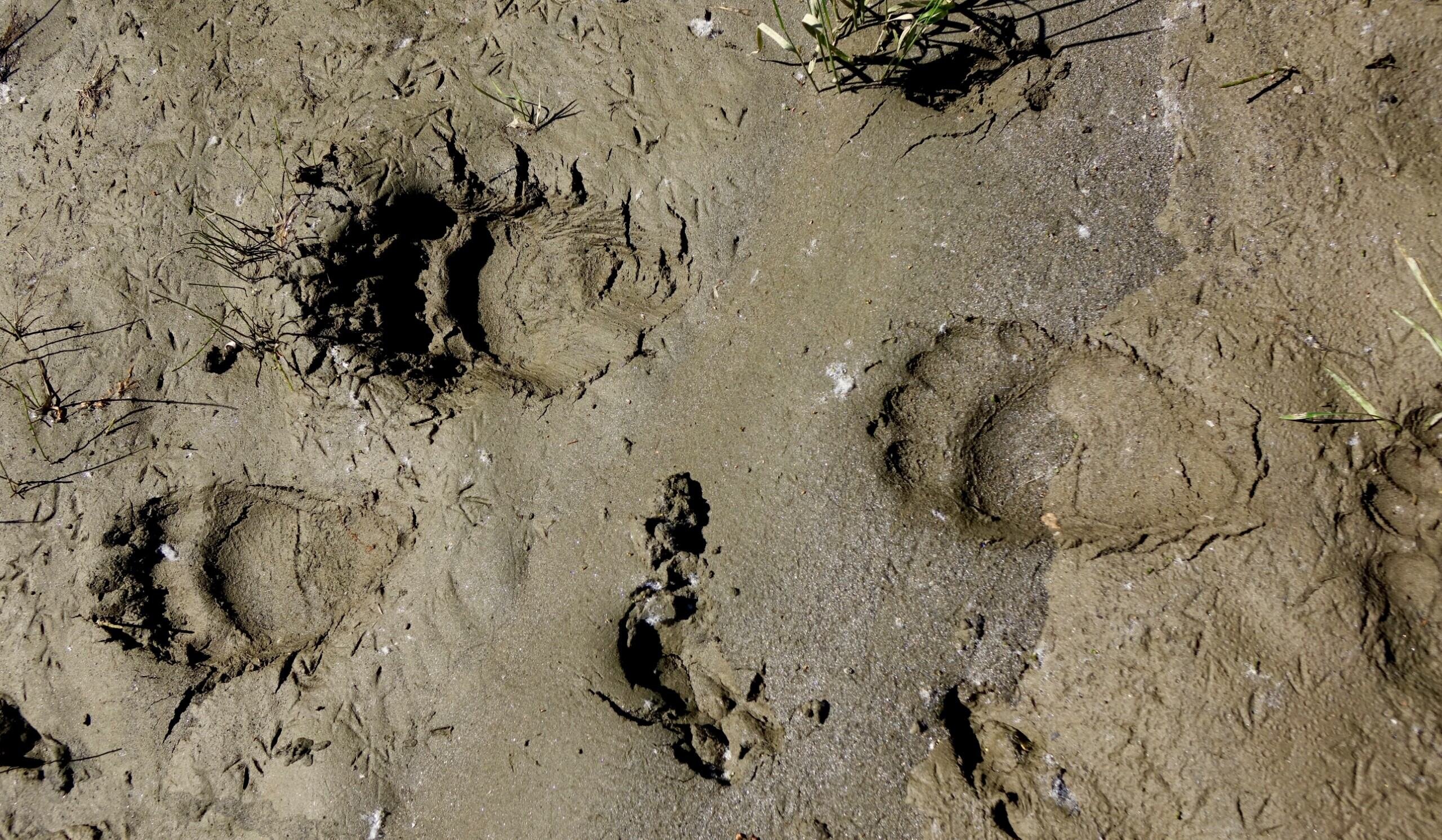
A set of black bear tracks on a river bank in British Columbia, Canada.
iStock.com/twigymuleford
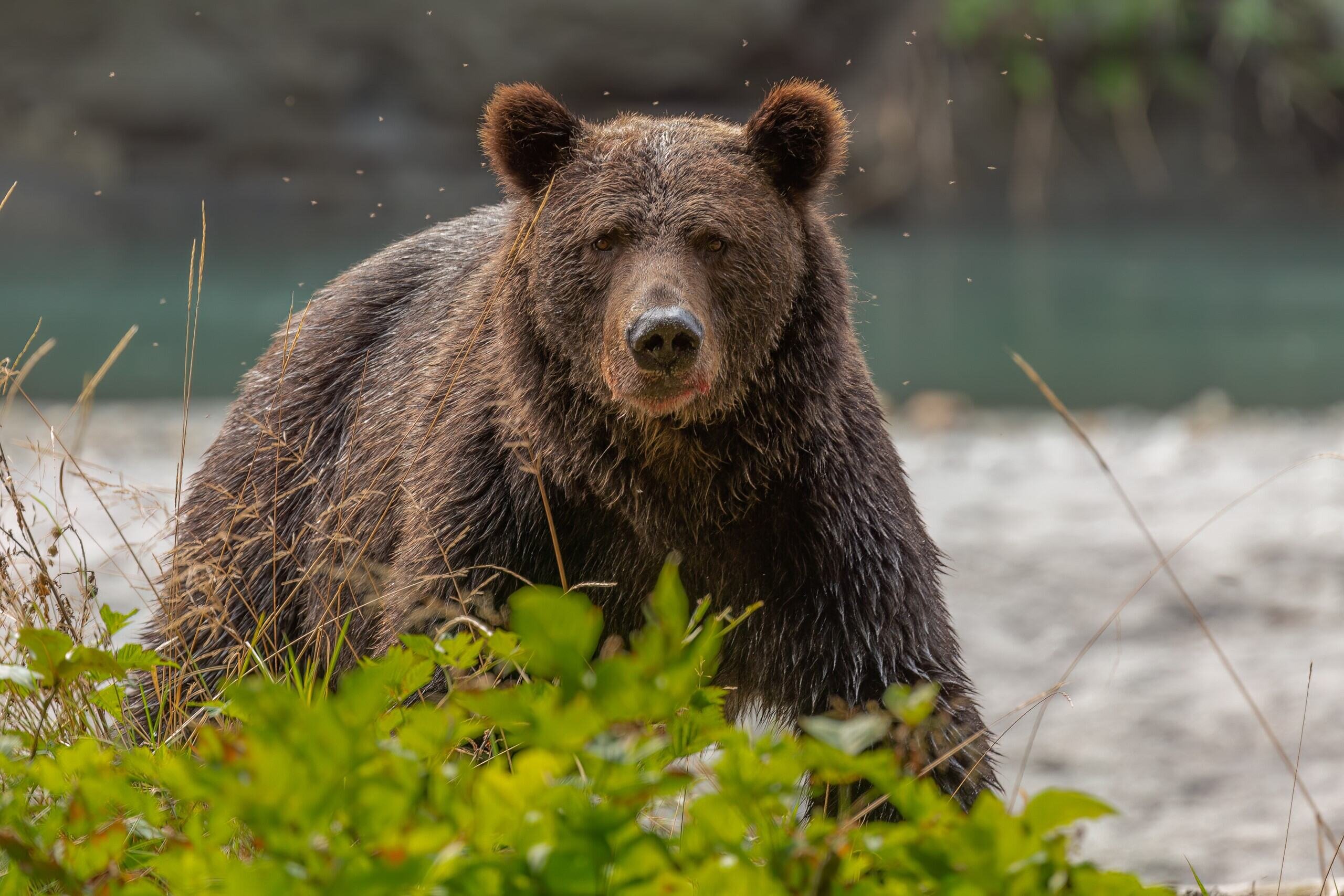
A grizzly bear (Ursus arctos).
iStock.com/Jennyfer Simonin
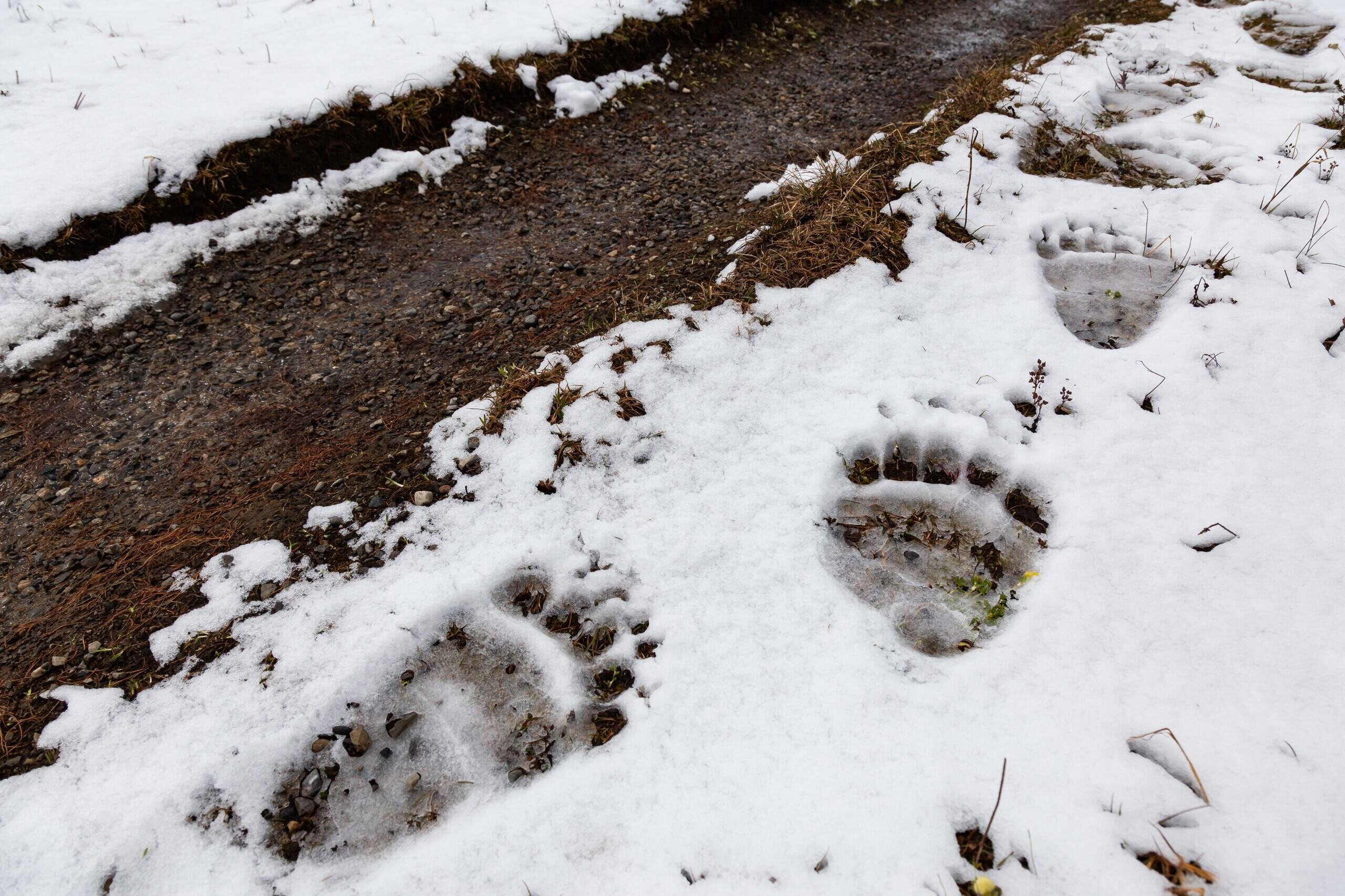
Grizzly bear tracks in the snow.
iStock.com/edb3_16
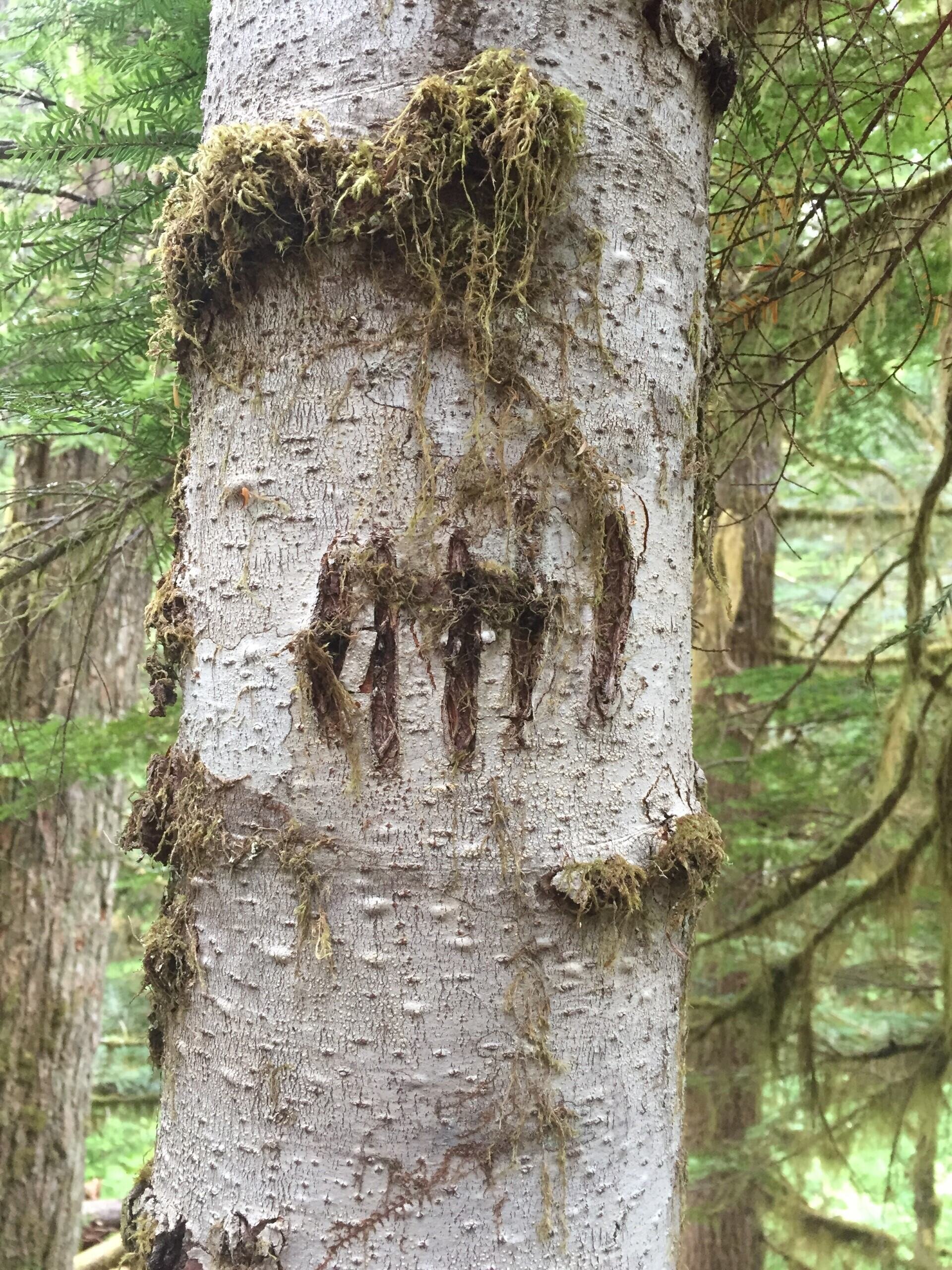
Grizzly bear claw marks on a tree trunk.
iStock.com/Sonia Mazanek
Selected references
Bowersock, N.R.; Okada, H.; Litt, A.R.; Gunther, K.A.; van Manen, F.T. 2022. Rub tree use and selection by American black bears and grizzly bears in northern Yellowstone National Park. Ursus 2022(33e7): 1–12. https://doi.org/10.2192/URSUS-D-21-00009.3
Burleigh, J.T.; Ebata, T.; White, K.J.; Rusch, D.; Kope, H., editors. 2014. Field guide to forest damage in British Columbia (3rd edition). Crown Publications, Province of British Columbia. Joint publication No.17. 368 p.
Canadian Wildlife Federation and Environment and Climate Change Canada. Hinterland Who’s Who. Black bears. Available at: https://www.hww.ca/wildlife/mammals/black-bear/ [Accessed March 2024]
Canadian Wildlife Federation and Environment and Climate Change Canada. Hinterland Who’s Who. Grizzly bears. Available at: https://www.hww.ca/en/wildlife/mammals/grizzly-bear.html [Accessed March 2024]
Harestad, A.S.; Bunnell, F.L.; Sullivan, T.P.; Andrusiak, L. 1986. Key to injury of conifer trees by wildlife in British Columbia. Research Branch, British Columbia Ministry of Forests. Victoria, British Columbia. Wildlife Habitat Research Publication WHR-23. 38 p.
Hiratsuka, Y.; Langor, D.W.; Crane, P.E. 2004. A field guide to forest insects and diseases of the prairie provinces (2nd edition). Natural Resources Canada, Canadian Forest Service, Northwest Region, Northern Forestry Centre. Edmonton, Alberta. Special Report 3. 297 p. https://www.ubcpress.ca/field-guide-to-forest-insects-and-diseases-of-the-prairie-provinces
Internet Center for Wildlife Damage Management (ICWDM.org). Available at: https://icwdm.org/identification/inspection/outdoors/trees/ [Accessed March 2024]
Kline, K.N.; Taylor, J.D.; Morzillo, A.T. 2018. Estimating stand-level economic impacts of black bear damage to intensively managed forests. Canadian Journal of Forest Research 48(7): 758–765. https://doi.org/10.1139/cjfr-2017-0314
McLellan, B.N.; Hovey, F.W. 1995. The diet of grizzly bears in the Flathead River drainage of southeastern British Columbia. Canadian Journal of Zoology 73(4): 704–712. https://doi.org/10.1139/z95-082
Mendia, S.M.; Johnson, M.D.; Higley, J.M. 2019. Ecosystem services and disservices of bear foraging on managed timberlands. Ecosphere 10(7): e02816. https://doi.org/10.1002/ecs2.2816
Mosnier, A.; Ouellet, J.-P.; Courtois, R. 2015. Black bear adaptation to low productivity in the boreal forest. Écoscience 15(4): 485–497. https://doi.org/10.2980/15-4-3100
Munro, R.H.M.; Nielsen, S.E.; Price, M.H.; Stenhouse, G.B.; Boyce, M.S. 2006. Seasonal and diel patterns of grizzly bear diet and activity in west-central Alberta. Journal of Mammalogy 87(6): 1112–1121. https://doi.org/10.1644/05-MAMM-A-410R3.1
Popp, J.N.; Hamr, J.; Larkin, J.L.; Mallory, F.F. 2018. Black bear (Ursus americanus) and wolf (Canis spp.) summer diet composition and ungulate prey selectivity in Ontario, Canada. Mammal Research 63: 433–441. https://doi.org/10.1007/s13364-018-0368-y
Cite this fact sheet
Brandt, J.P. and Callan, B.E. 2025. Bear damage. In J.P. Brandt, B.I. Daigle, J.-L. St-Germain, A.C. Skinner, B.C. Callan, and V.G. Nealis, editors. Trees, insects, mites, and diseases of Canada’s forests. Natural Resources Canada, Canadian Forest Service, Headquarters. Ottawa, Ontario.Page details
- Date modified: