
Beaver damage

Cause and general information
Beavers (Castor canadensis Kuhl) are the largest rodent in Canada and can be found in forested areas throughout the country. This animal has had a significant influence on the history of Canada. Beavers cut down saplings and small trees for food and use them to create dams and lodges. Beaver damage extends beyond the trees they cut because flooding caused by dam building can damage or kill adjacent forests upstream from the dams. However, beavers also play important ecological roles in altering streams and riparian zones for the benefit of other animals and the broader environment.
Distribution and species affected
Beavers occur in forested areas near watercourses in every province and territory of Canada, and their range extends as far north as the treeline. They also can be found throughout the continental United States, including Alaska. Their main source of nutrition is the bark of broadleaf trees for food, in particular aspens and poplars (Populus), alder (Alnus), birch (Betula), and willow (Salix). Any tree, including conifers, can be felled to construct dams and lodges, if they are nearby.
Tree parts affected
Trunks and branches, particularly of broadleaf trees
Symptoms and signs
The damage caused by beavers is very distinctive. Tree trunks up to 40 centimetres in diameter can be gnawed all the way around the trunk’s circumference until insufficient material remains to support the tree and it falls. Felled trees leave behind a stump with a conical tip that is grooved with tooth marks and surrounded by wood chips. Branches clipped for food are removed from the fallen tree with angular cuts, and muddy trails indicate where they have been dragged to nearby water by the beavers. Food branches are stored in an underwater cache near the lodge, a structure containing the beaver’s den. Branches and smaller stems, which are cut to short lengths to facilitate their transport, are used for dam and lodge construction. Trees are usually cut within 50 metres of the water’s edge. Most trees are cut close to food caches and construction sites are at the most 800 metres upstream and 300 metres downstream. In still water, most activity is within 600 metres of caches. Muddy ground is easier to move materials over. Beavers will persist in an area until aspen and then willow supplies are exhausted, moving on in as little as 10 years after the colony is established.
In habitats with running water, beaver activity will be greatest upstream because it is easier to move branches and stems with the water current.
Other than dams, flooding, and fallen trees, signs that beavers are in the vicinity include scent mounds, which are piles of mud on trails that are covered by a musky oil (castoreum) secreted from two glands under the tail. Tracks are visible in snow and on muddy ground. Front paw prints are five-fingered with claw marks at the tips, and rear paw prints are triangular, with faint evidence of webbing between the prints from the digits.
Damage
Each adult beaver cuts down an average 216 trees per year. About a half a hectare of aspen will support one beaver for a year, depending on the size and density of the trees. They are wasteful harvesters, using less than half of the bark on larger logs for food. Young hybrid poplar plantations that are near streams can be heavily damaged by beavers chewing whips (shoots planted for vegetative propagation) and cutting down young trees. Flooding of forested land near beaver dams can result in tree mortality.
The economic impact of tree loss is overshadowed by the millions of dollars spent each year on repairs to agricultural lands and urban infrastructure due to flooding caused by beaver dams.
Despite the damage they cause, beaver activities also create positive environmental benefits to Canadian ecosystems. Their damming activities help to stabilize watersheds, improve water quality, and create habitats for other species of animals dependent on aquatic habitats.
Prevention and management
Only licensed trappers are permitted to kill beavers. In regions with heavy beaver damage, properly planned removal of a portion of the population by trapping can reduce undesirable damage. Population control slows the rate of beaver tree harvesting, facilitating better vegetation recovery along waterways.
When beaver activity encroaches on urban areas, damage to individual trees near water may be prevented by surrounding them with a collar of wire fencing to a height of 1.2 metres. Dam removal is only legal for holders of trapping permits. Beavers are attracted to the sound of rushing water, so removal of a dam draws them back to repair it. Breaking large dams resulting in a sudden flood of water and debris downstream could also potentially violate regulations in the Canadian Fisheries Act and various provincial water acts.
Live trapping and relocation may temporarily solve beaver problems, but some provinces have regulations as to how far the beavers may be moved. For example, in Ontario, beavers may only be moved 1 kilometre away and must be moved within 24 hours of being trapped.
Photos

An adult beaver (Castor canadensis).
iStock.com/webmink

An aerial view of a beaver pond.
iStock.com/Brittany Crossman
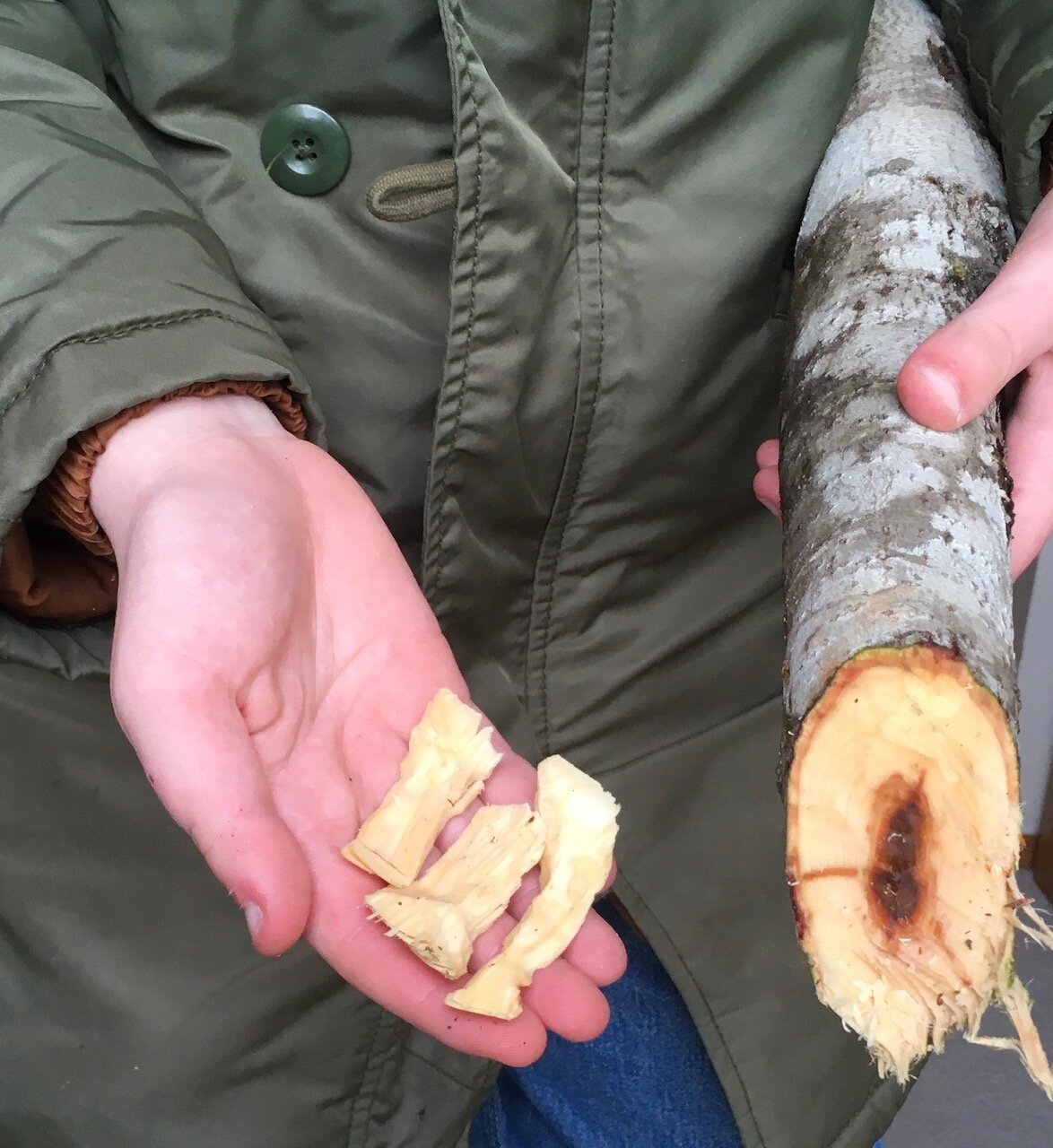
Beaver chips and section of cut sapling, Vancouver Island, British Columbia.
Brenda Callan
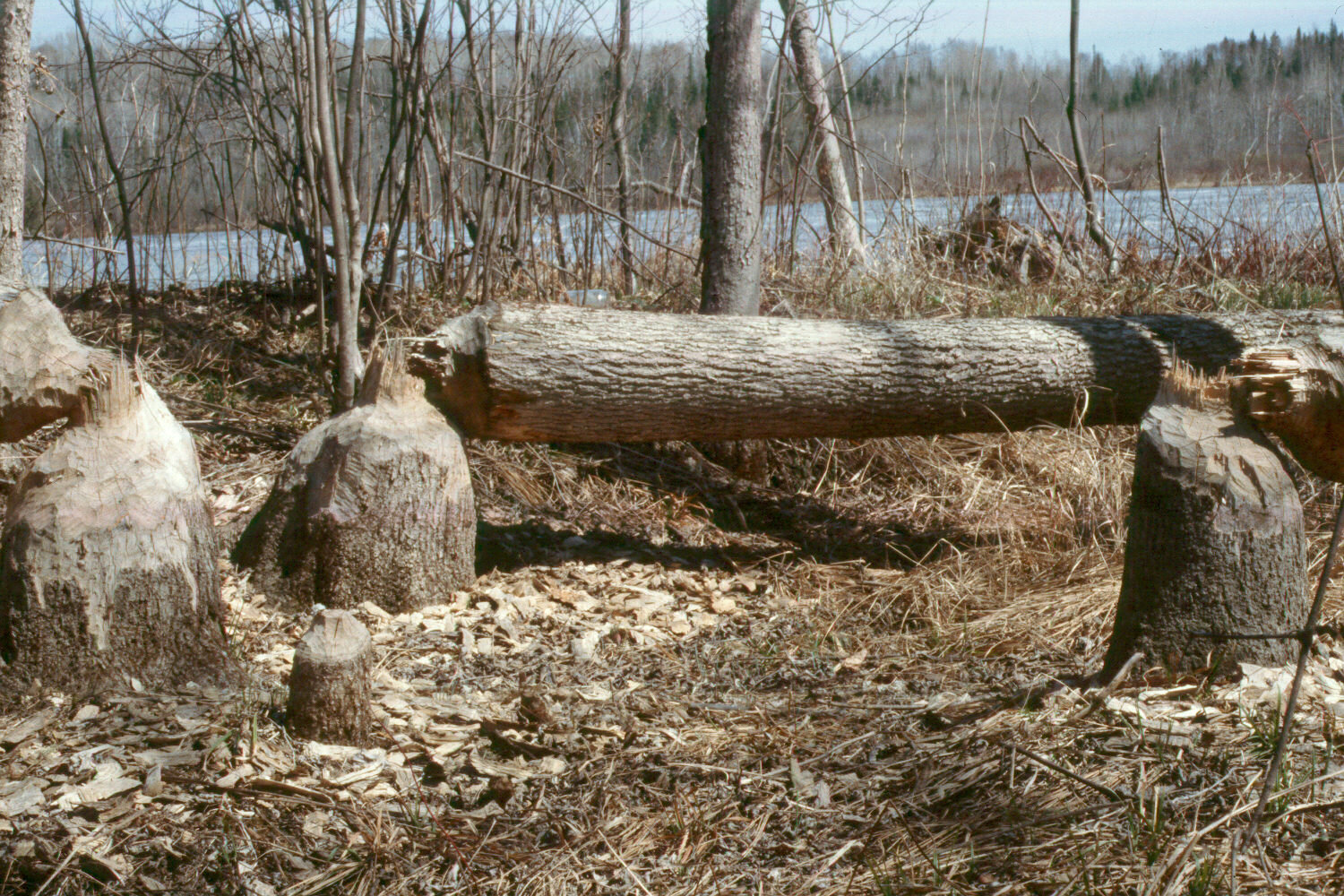
A felled tree and conical stump surrounded by wood chips resulting from the activity of a beaver.
Great Lakes Forestry Centre, Canadian Forest Service, Natural Resources Canada / Centre de foresterie des Grands Lacs, Service canadian des forêts, Ressources naturelles Canada
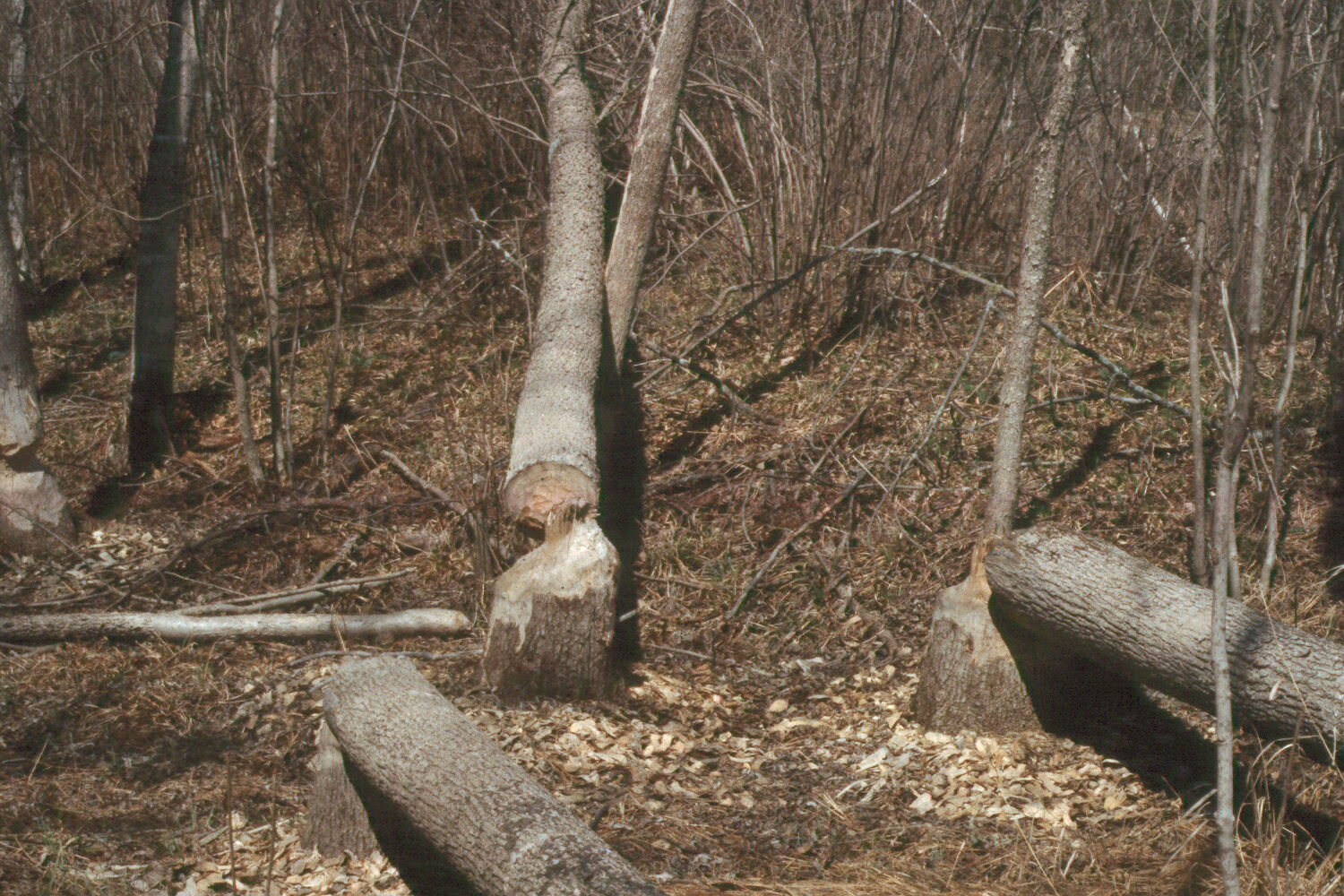
Several felled trees and conical stumps surrounded by wood chips resulting from the activity of a beaver. Also note the notched, partially chewed trunk on the extreme left of the photograph.
Great Lakes Forestry Centre, Canadian Forest Service, Natural Resources Canada / Centre de foresterie des Grands Lacs, Service canadian des forêts, Ressources naturelles Canada
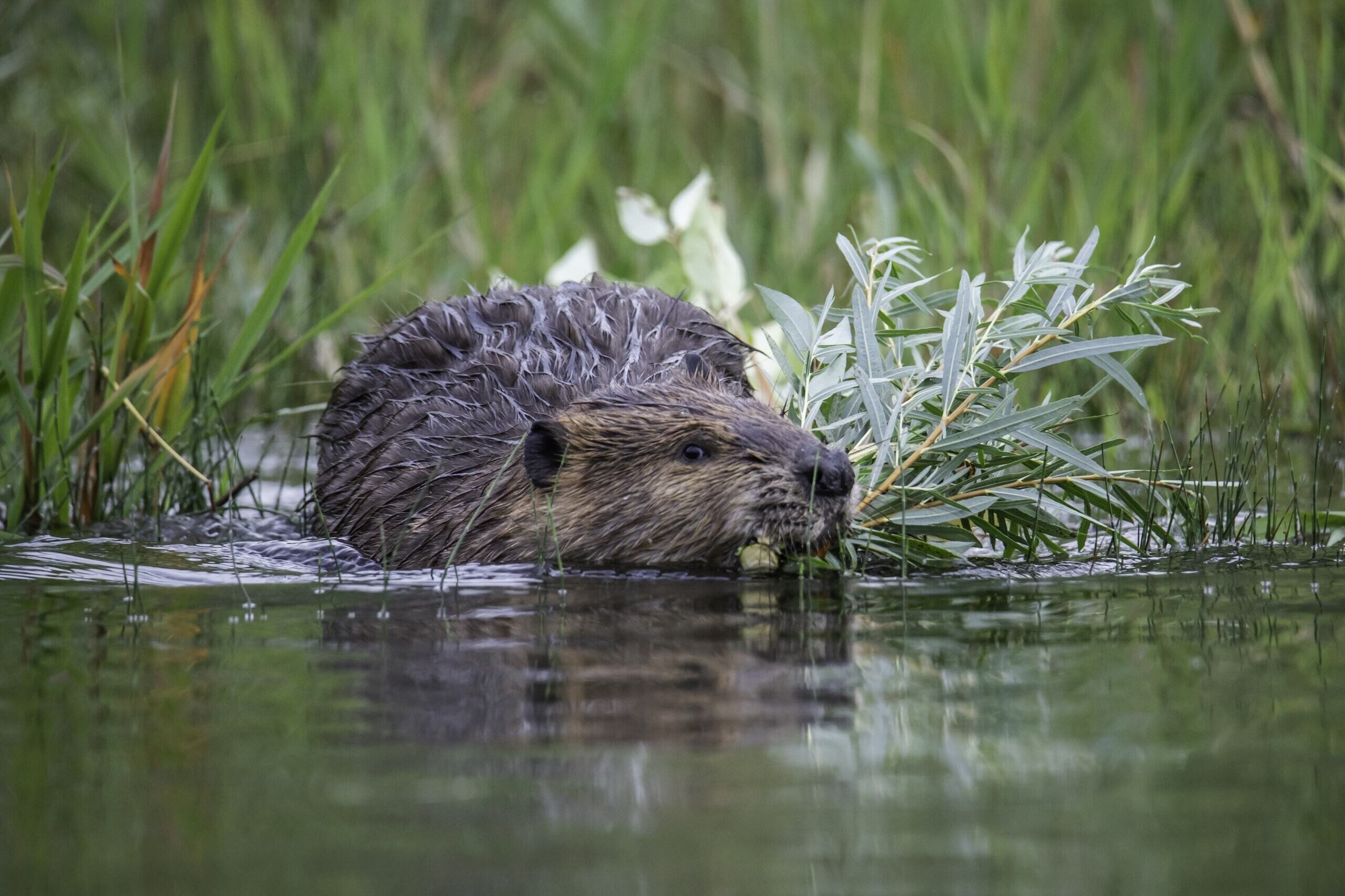
Clipped branches resulting from the activity of beavers.
iStock.com/Tony LePrieur

Partially chewed trunk caused by the activity of beavers.
iStock.com/Matt LaVigne

A beaver dam.
iStock.com/Anna Richard
Selected references
Bailey, D.R.; Dittbrenner, B.J.; Yocom, K.P. 2018. Reintegrating the North American beaver (Castor canadensis) in the urban landscape. WIREs Water 6(1): e1323. https://doi.org/10.1002/wat2.1323
Burleigh, J.T.; Ebata, T.; White, K.J.; Rusch, D.; Kope, H., editors. 2014. Field guide to forest damage in British Columbia (3rd edition). Crown Publications, Province of British Columbia. Victoria, British Columbia. Joint publication No.17. 368 p.
Canadian Wildlife Federation and Environment and Climate Change Canada. Hinterland Who’s Who: Beaver. Available at: https://www.hww.ca/en/wildlife/mammals/beaver.html [Accessed March 2024]
Fortin, C; Laliberté, M.; Ouzilleau, J. 2002. Management guide for land used by beavers in Quebec. Fondation de la faune du Québec. Sainte-Foy, Québec. 96 p.
Gibson, P.P.; Olden, J.D. 2014. Ecology, management, and conservation implications of North American beaver (Castor canadensis) in dryland streams. Aquatic Conservation: Marine and Freshwater Ecosystems 24(3): 391–409. https://doi.org/10.1002/aqc.2432
Harestad, A.S.; Bunnell, F.L.; Sullivan, T.P.; Andrusiak, L. 1986. Key to injury of conifer trees by wildlife in British Columbia. Research Branch, British Columbia Ministry of Forests. Victoria, British Columbia. Wildlife Habitat Research Publication WHR-23. 38 p.
Hunter, D. 1988. Management guidelines in British Columbia. Beaver. Province of British Columbia, Ministry of Environment, Wildlife Branch. Victoria, British Columbia. 6 p.
Internet Center for Wildlife Damage Management. Identifying wildlife damage to trees, shrubs, & bushes: Where is the damage occurring? Available at: https://icwdm.org/identification/inspection/outdoors/trees/ [Accessed March 2024]
Jenkins, S.H. 1980. A size-distance relation in food selection by beavers. Ecology 61(4): 740–746. https://doi.org/10.2307/1936743
Naiman, R.J.; Melillo, J.M.; Hobbie, J.E. 1986. Ecosystem alteration of boreal forest streams by beaver (Castor canadensis). Ecology 67(5): 1254–1269. https://doi.org/10.2307/1938681
Pinkowski, B. 1983. Foraging behavior of beavers (Castor canadensis) in North Dakota. Journal of Mammalogy 64(2): 312–314. https://doi.org/10.2307/1380565
Cite this fact sheet
Callan, B.E. 2025. Beaver damage. In J.P. Brandt, B.I. Daigle, J.-L. St-Germain, A.C. Skinner, B.C. Callan, and V.G. Nealis, editors. Trees, insects, mites, and diseases of Canada’s forests. Natural Resources Canada, Canadian Forest Service, Headquarters. Ottawa, Ontario.Page details
- Date modified: