
Sapsucker damage

Cause and general information
Sapsuckers (species of Sphyrapicus), a type of small woodpecker, excavate rows of holes in thin-barked trees to feed on their sap and sapwood. They feed on a wide array of both conifer and broadleaf trees, and intensive feeding over a period of several years may result in top-kill or mortality. Additionally, the wounds created by sapsuckers provide an entrance court for canker and decay pathogens and insects.
Distribution and species affected
Four species of migratory sapsuckers have seasonal distribution ranges in Canada from spring to fall. The most common species occurring throughout Canada is the yellow-bellied sapsucker (Sphyrapicus varius L.). Although it is only rarely encountered on the west coast of British Columbia, it is the only species present in eastern Canada. There are three other species present in western Canada. The most common species west of the Cascade Range in Canada is the red-breasted sapsucker (Sphyrapicus ruber J.F. Gmelin). Two other species are found in south-central and southeastern British Columbia and southwestern Alberta: Williamson’s sapsucker (Sphyrapicus thyroideus Cassin) and red-naped sapsucker (Sphyrapicus nuchalis S.F. Baird). The Canadian distribution of red-naped sapsucker is a little broader and extends farther north than that of Williamson’s sapsucker. The combined summer range of all species stretches across Canada from British Columbia to the island of Newfoundland, and as far north as the Yukon and the Northwest Territories.
Sapsuckers prefer to feed on thin-barked trees. They mostly attack broadleaf trees but will also feed on thin-barked areas of conifers such as western redcedar (Thuja plicata), pine (Pinus), spruce (Picea), and hemlock (Tsuga). Preferred broadleaf trees are aspens and poplars (Populus), birch (Betula), maple (Acer), and willow (Salix), but many other tree genera can also be tapped for sap, including fruit trees (apple [Malus] and cherry and plum [Prunus]) in orchards.
Tree parts affected
Trunks and larger branches of conifers and broadleaf trees
Symptoms and signs
Sapsuckers are medium-sized birds. They are a type of woodpecker with a stout bill and distinct colouration. Yellow-bellied sapsuckers are about 18 to 22 centimetres long with a wingspan of 34 to 40 centimetres. They are mostly black and white and have bold black-and-white stripes that curve from their face toward a black chest shield. They have white or yellowish underparts. Males have a vertical white wing patch and a red crown and throat. Females are similar but lack the red throat. Red-breasted sapsuckers are about 20 to 22 centimetres long with a wingspan of 37 to 41 centimetres. Males and females of the red-breasted sapsucker have a red head and breast, and there is a white spot between the eye and bill. Their backs are mottled black and white and there is also usually a large, vertical, white patch on the folded wing. Underparts of this species are mostly white with dark streaks and a yellowish tinge. Williamson’s sapsuckers are the largest of the group and are about 20 to 25 centimetres long. Males are mostly black dorsally and have a vertical white wing patch. There are two white bands horizontally on their faces. Males also have a small red throat patch and a yellow belly. Females have fine horizontal black and white stripes on their back, a black patch on their breast, and a brown head. Red-naped sapsuckers are about 19 to 20 centimetres long with a wingspan of 41 to 43 centimetres. They are predominantly black and white overall. Males have a vertical white patch on the folded wing, and a red chin, throat, crown, and a small nape (directly behind the head on the neck) patch. Females have a white chin patch, a red throat, and the nape can be either white or red.
Damage occurs on trunks and larger branches of trees, where the sapsucker pecks sap wells (holes in the bark) in neat horizontal and vertical lines. The largest sap wells are about 1 centimetre in width, and the underlying sapwood may become darkly stained or streaked. If the sap wells are very numerous and closely spaced, they may cause chunks of bark to fall off. Sapsuckers drill into the phloem first in the spring. They start by making a slit in the bark, which is gradually enlarged to a horizontally rectangular shape. Later in the season, wells are drilled deeper into the xylem, and these deeper holes tend to be more circular in shape. New wells are excavated when the old ones dry up. Sapsucker wells are also visited by insects, hummingbirds and small mammals attracted to the sap. Unlike sapsucker wells, holes caused by wood-boring insects occur in a more irregular, scattered pattern, are often smaller, and usually contain fine sawdust or other insect debris (frass).
Damage
Extensive damage around the entire circumference of a trunk or branch can cause girdling and death of the portion of the tree above the damaged area, or in severe cases, death of the entire tree if it occurs on the lower trunk. Usually, two or more years of intense feeding is required to cause tree mortality. Sap well wounds are potential infection courts for canker pathogens, sap stain, and decay fungi. Old overgrown sap wells are often the site of crack development between growth rings (ring shake).
In a 35-year-old plantation of Norway spruce (Picea abies) in Quebec, more than 90% of the trees were damaged by sapsuckers, with resinosis associated with the wounds. In Haida Gwaii, British Columbia, sapsucker holes have been observed in association with basal scar damage in mature western hemlock (Tsuga heterophylla) stands.
Sapsuckers are cavity-nesting birds, and they excavate hollows in trees to raise their young. However, nesting damage is largely limited to trees that already have advanced trunk decay. Sapsuckers choose trees with heart rot to excavate their nests, because the wood is softer and easier to remove. In aspen stands, sapsuckers show a strong preference for tree trunks with decay columns caused by the fungus Phellinus tremulae.
Prevention and management
In urban areas, tree trunks under attack can be wrapped with burlap or landscaping cloth from April to September to prevent further damage and to allow the tree to heal. Often one tree in a yard will be preferred and frequently revisited by sapsuckers once the sap wells are established. Rather than removing or protecting the preferred tree, allowing sapsuckers to use it might prevent the birds from moving on to other nearby trees.
All species of sapsuckers are protected by the Migratory Birds Convention Act in Canada, so no measures should ever be taken to harm these birds.
Information on legal protection of migratory birds can be found at https://www.canada.ca/en/environment-climate-change/services/migratory-birds-legal-protection/overview.html.
Information on the protected status of sapsuckers can be found at https://www.canada.ca/en/environment-climate-change/services/migratory-birds-legal-protection/list.html.
Photos
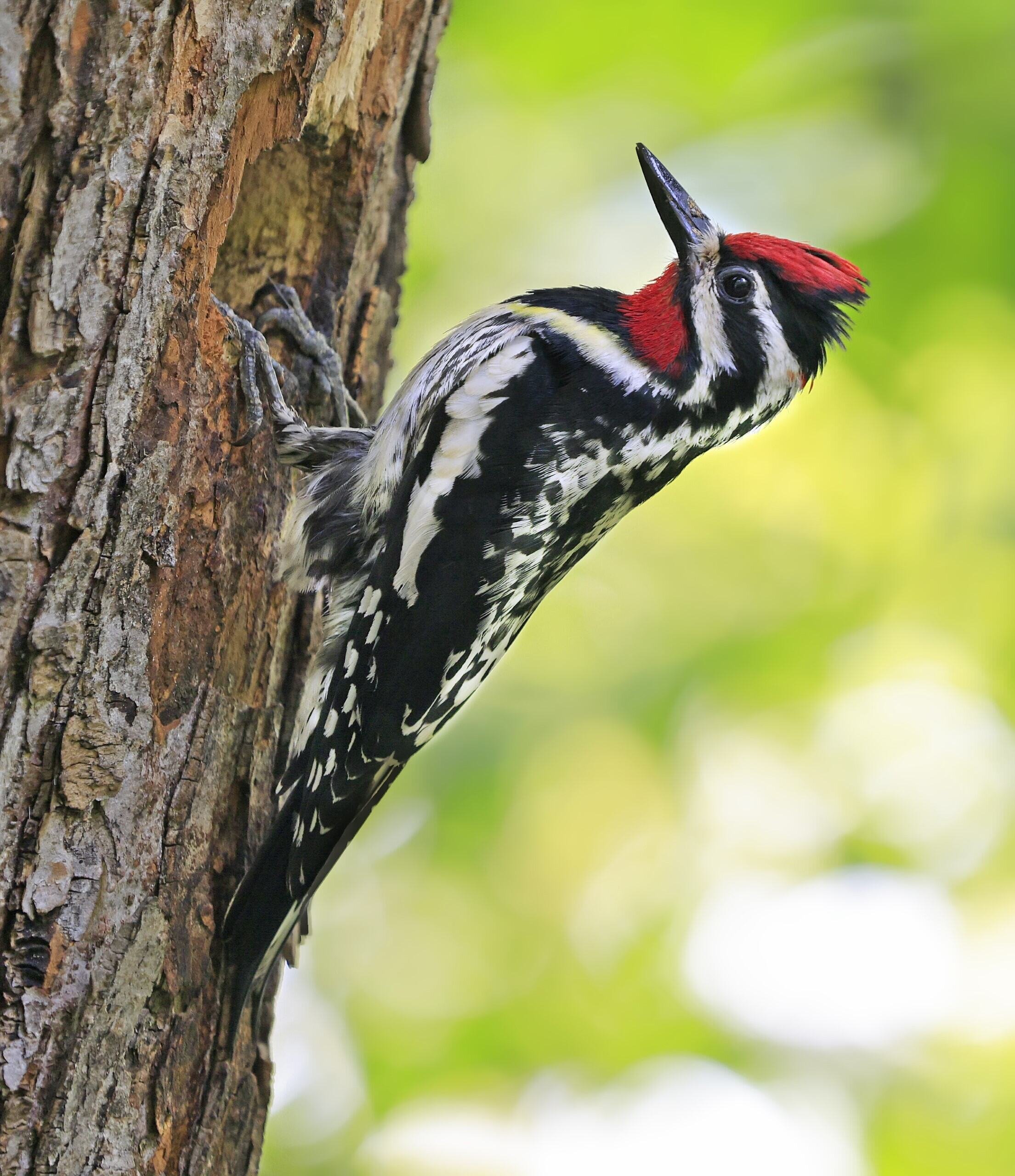
A male yellow-bellied sapsucker (Sphyrapicus varius) on a tree trunk. Quebec, Canada
iStock.com/Vladone
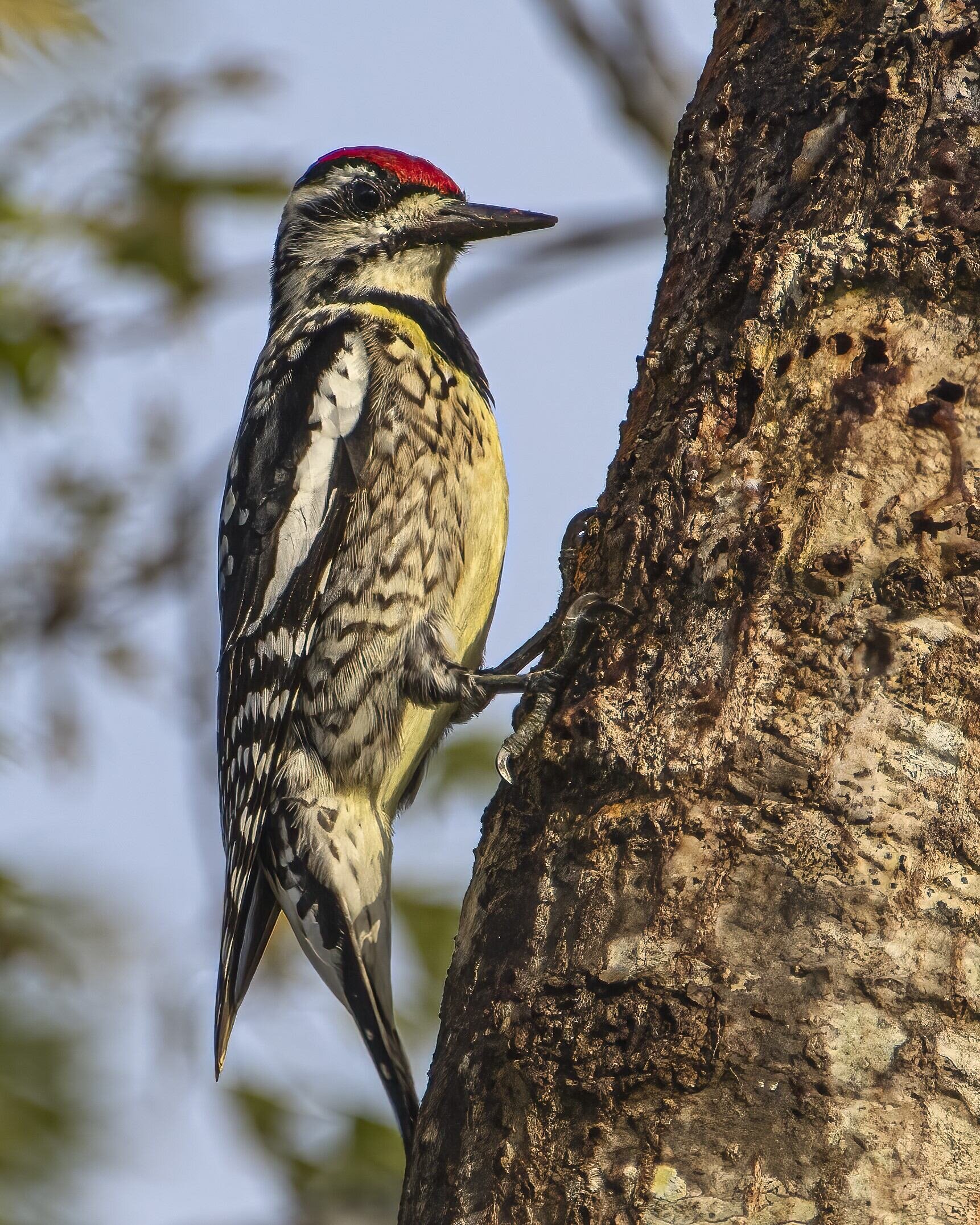
Female yellow-bellied sapsucker (Sphyrapicus varius) on a tree trunk.
iStock.com/Daryl Roston
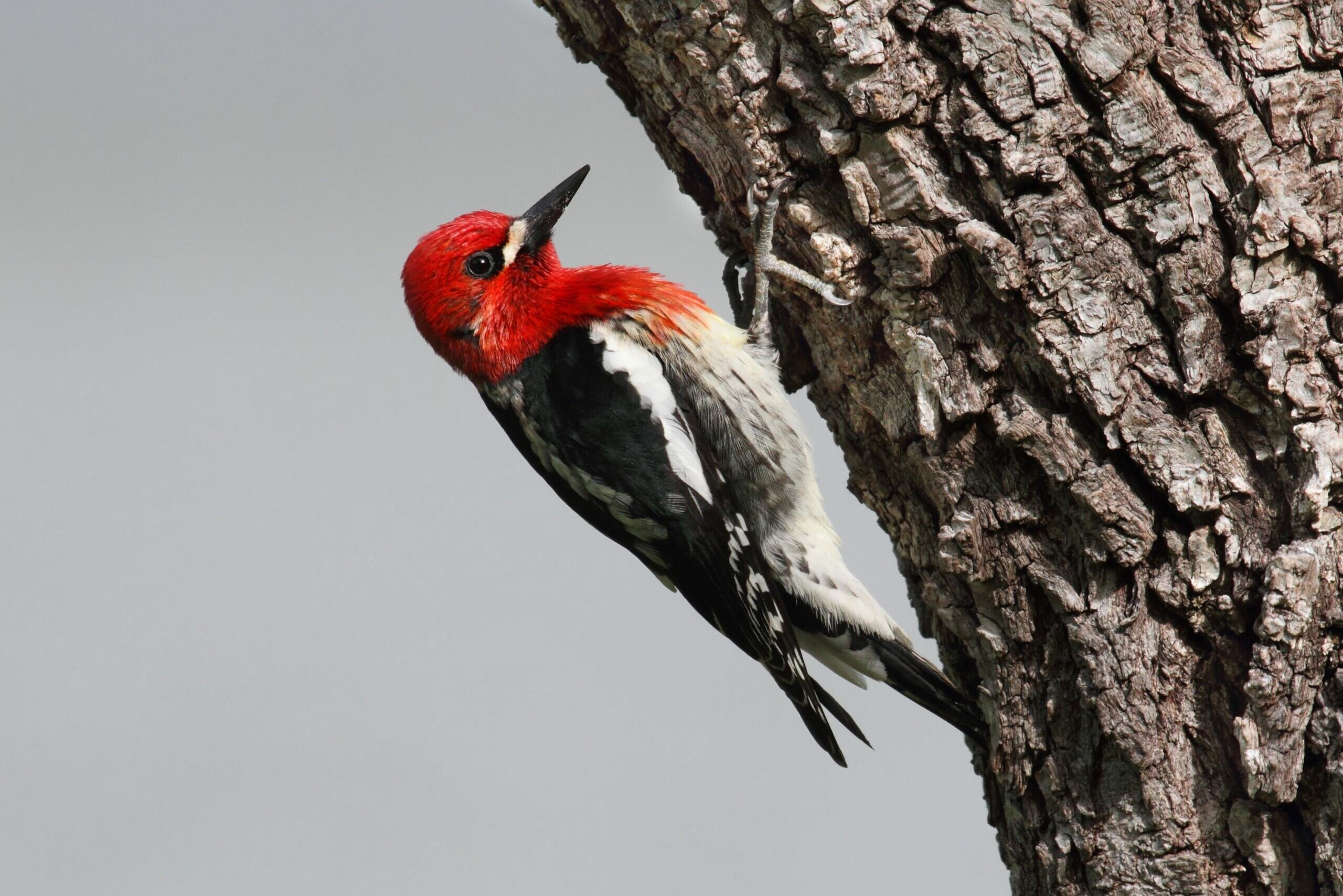
The male and female red-breasted sapsucker (Sphyrapicus ruber) look alike.
iStock.com/SteveByland
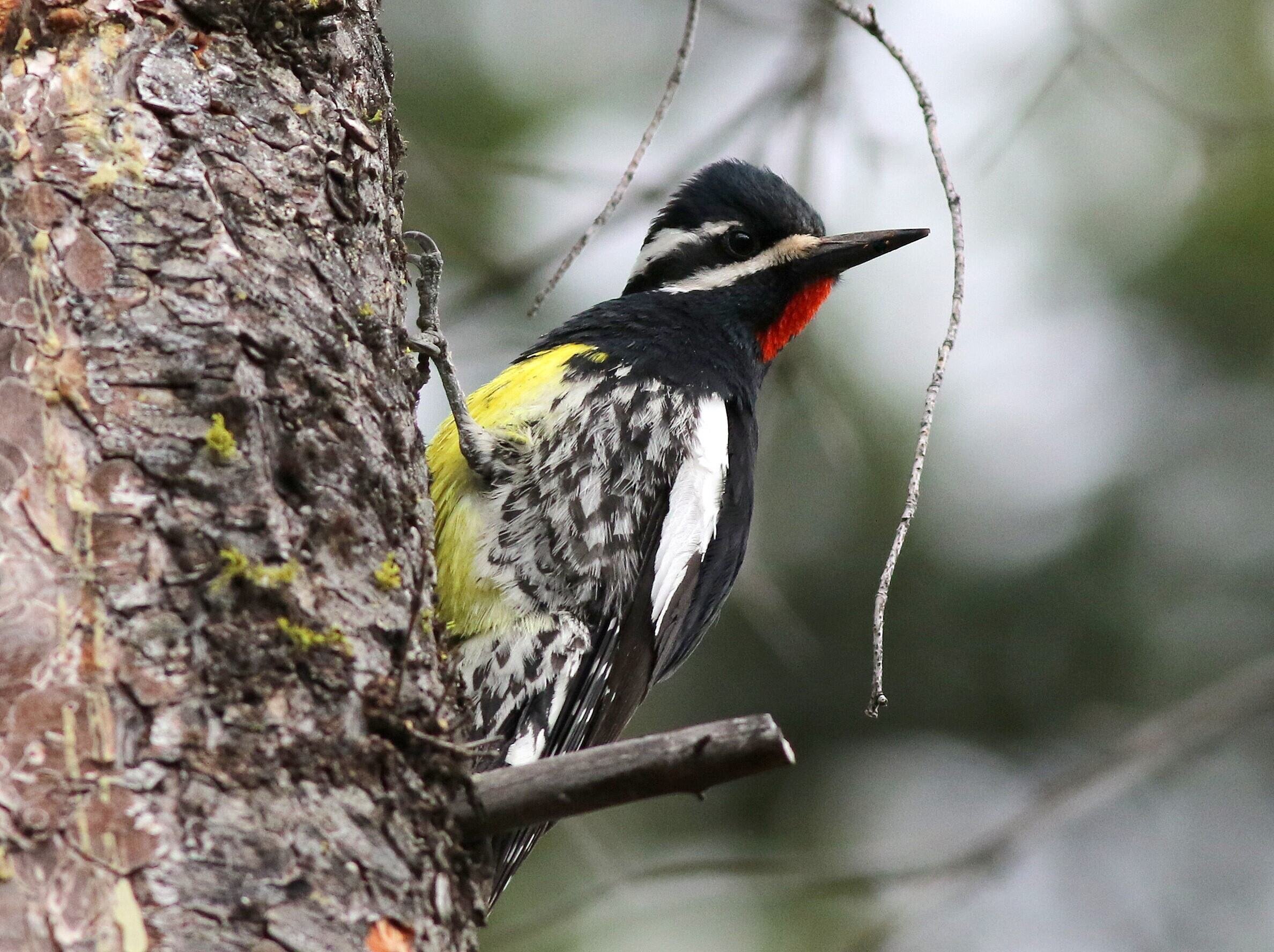
A male Williamson’s sapsucker (Sphyrapicus thyroideus).
iStock.com/randimal
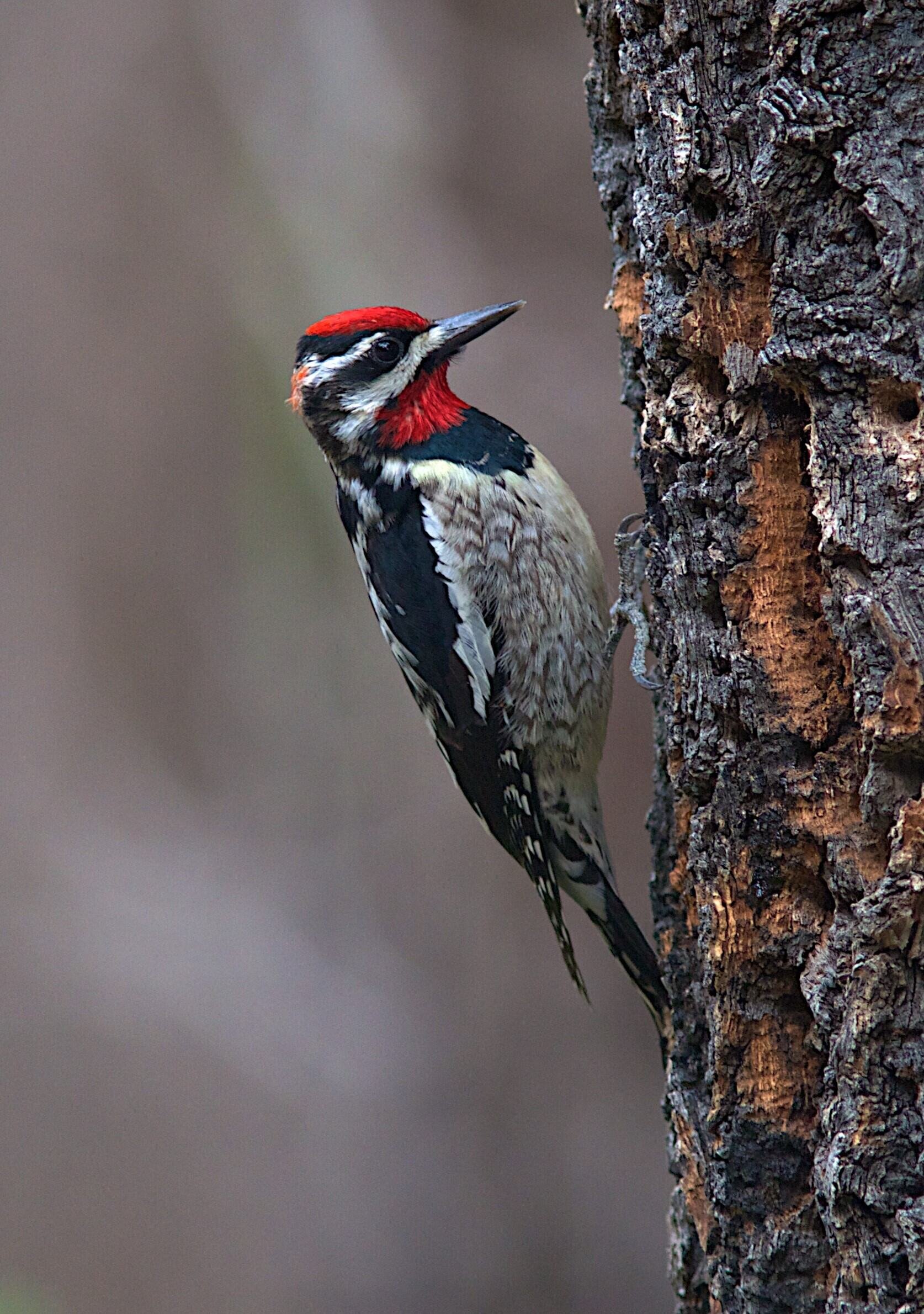
A male, red-naped sapsucker (Sphyrapicus nuchalis) feeds from holes drilled into a tree near Nelson, British Columbia, Canada.
iStock.com/GibsonPictures
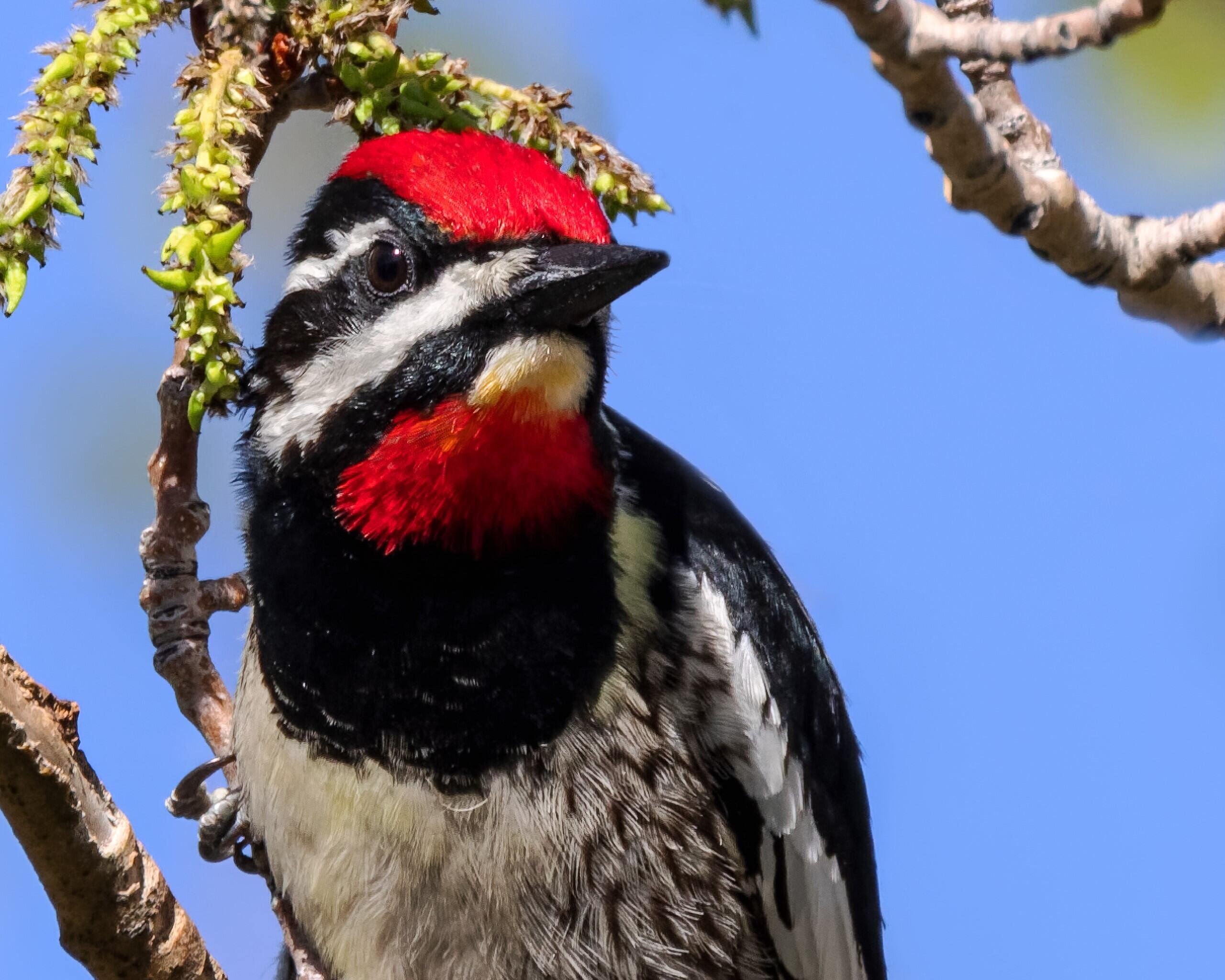
A female red-naped sapsucker (Sphyrapicus nuchalis).
iStock.com/M. Leonard Photography
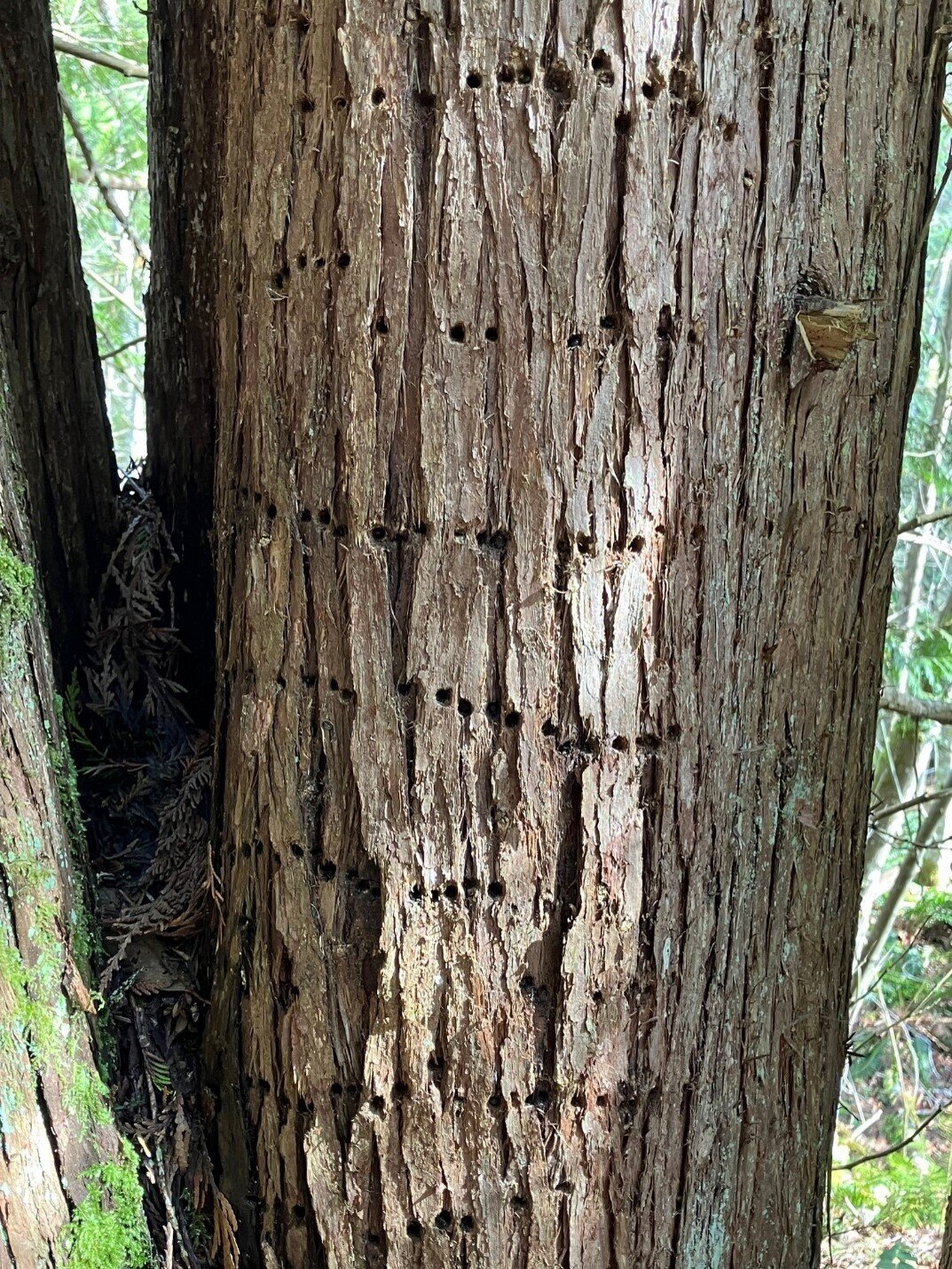
Sapsucker damage on western redcedar.
Brenda Callan
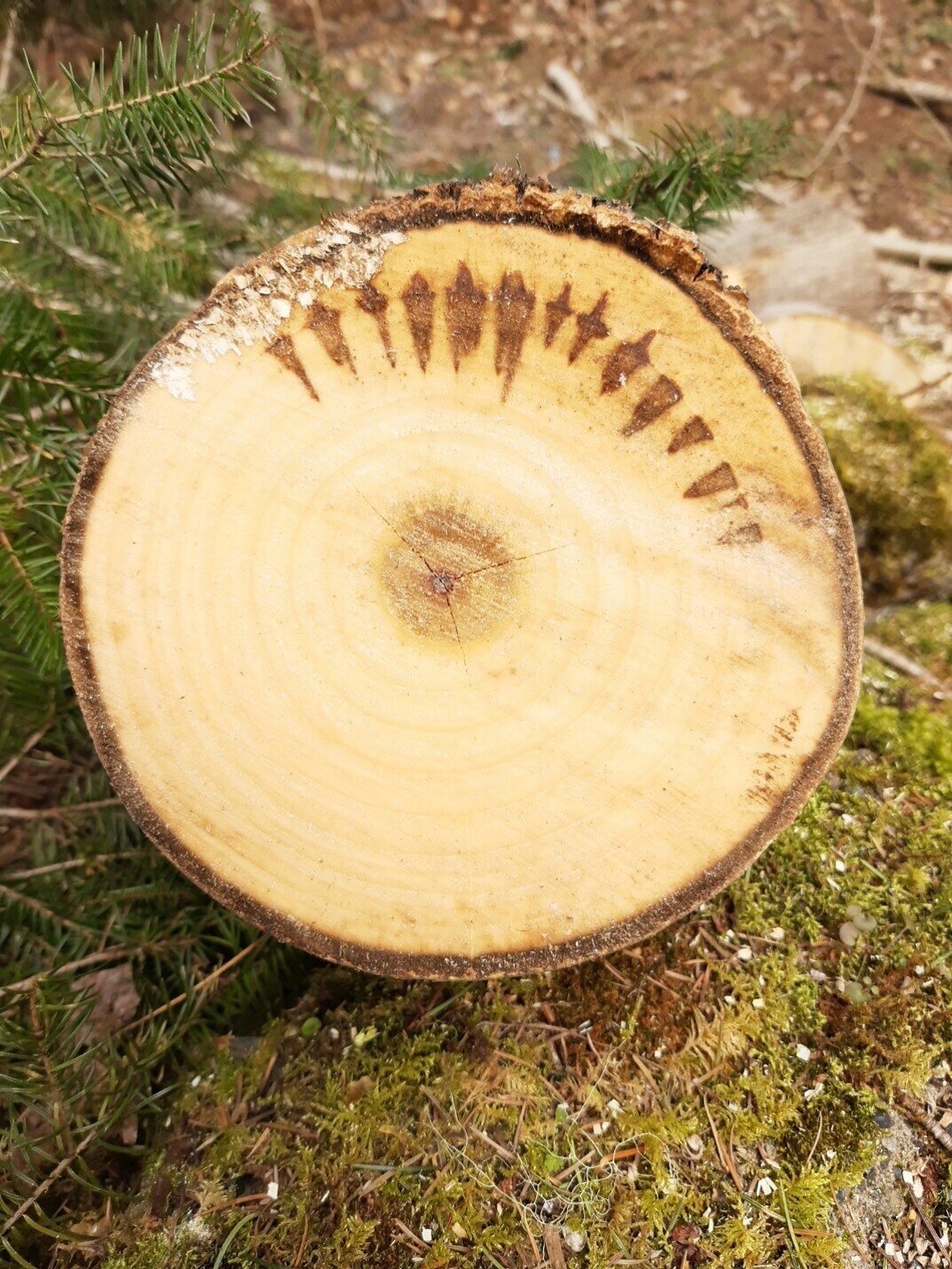
Sapsucker damage on poplar.
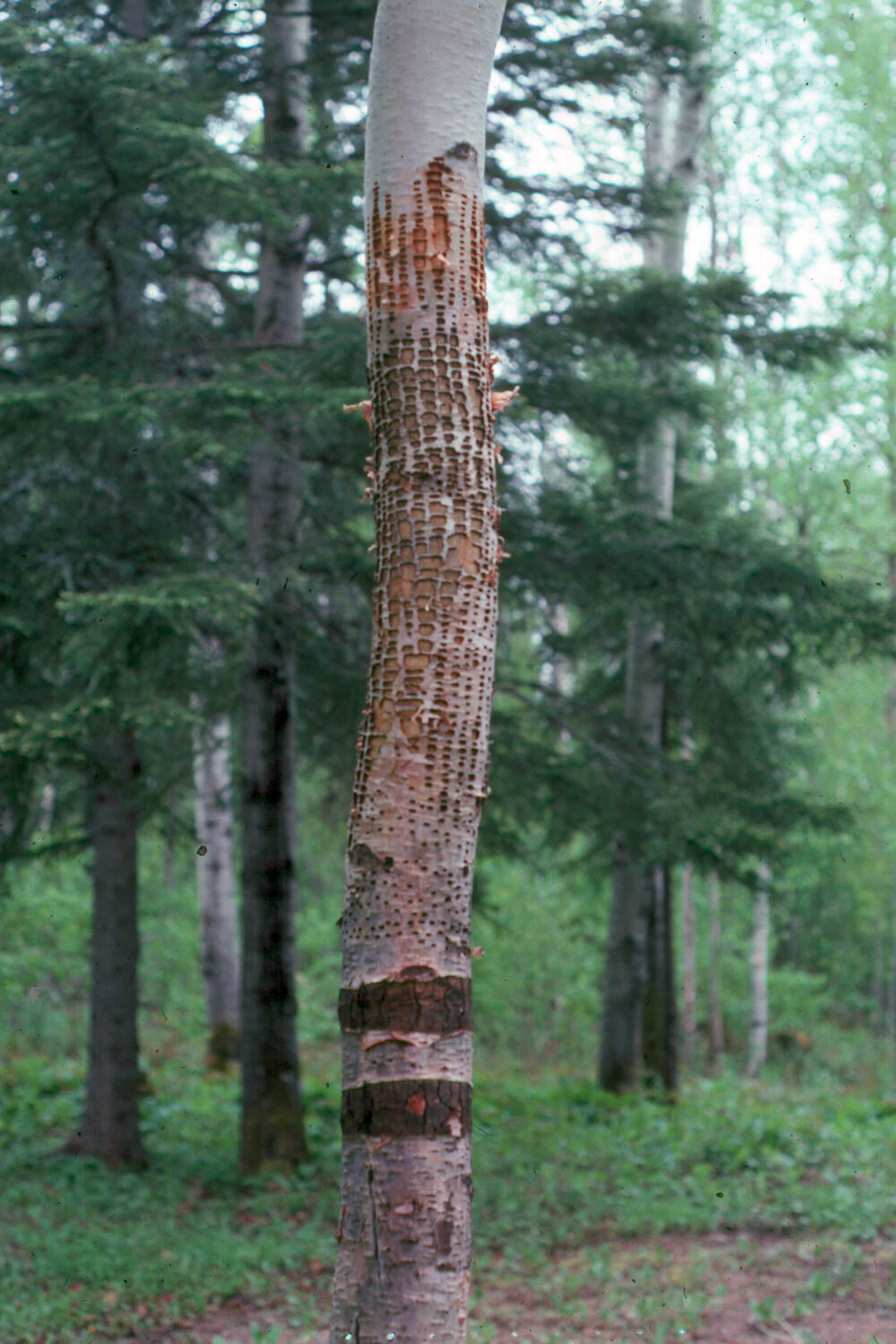
Tree with sapsucker damage (feeding holes).
Selected references
Callan, B.E. 1998. Diseases of Populus in British Columbia: a diagnostic manual. Natural Resources Canada, Canadian Forest Service, Pacific Forestry Centre. Victoria, British Columbia. 157 p. https://ostrnrcan-dostrncan.canada.ca/entities/publication/bef937ac-682a-4cb1-b656-883d69057160
Cornell Lab All About Birds. 2025. Red-breasted sapsucker. Cornell Lab of Ornithology. Ithaca, New York. Available at: https://www.allaboutbirds.org/guide/Red-breasted_sapsucker [Accessed January 2025]
Cornell Lab All About Birds. 2025. Red-naped sapsucker. Cornell Lab of Ornithology. Ithaca, New York. Available at: https://www.allaboutbirds.org/guide/red-naped_sapsucker [Accessed January 2025]
Cornell Lab All About Birds. 2025. Williamson’s sapsucker. Cornell Lab of Ornithology. Ithaca, New York. Available at: https://www.allaboutbirds.org/guide/williamsons_sapsucker [Accessed January 2025]
Cornell Lab All About Birds. 2025. Yellow-bellied sapsucker. Cornell Lab of Ornithology. Ithaca, New York. Available at: https://www.allaboutbirds.org/guide/Yellow-bellied_Sapsucker/ [Accessed January 2025]
Hildahl, V.; Hiratsuka, Y. 1991. Yellow-bellied sapsucker. Forestry Canada, Northwest Region, Northern Forestry Centre. Edmonton, Albera. Forestry Leaflet 2. https://ostrnrcan-dostrncan.canada.ca/handle/1845/238424
Hiratsuka, Y.; Langor, D.W.; Crane, P.E. 2004. A field guide to forest insects and diseases of the prairie provinces (2nd edition). Natural Resources Canada, Canadian Forest Service, Northwest Region, Northern Forestry Centre. Edmonton, Alberta. Special Report 3. 297 p. https://www.ubcpress.ca/field-guide-to-forest-insects-and-diseases-of-the-prairie-provinces
Ouellette, G.B. 1967. Les dégâts du pic maculé dans une plantation d'épinettes de Norvège. Phytoprotection 48(2): 82–85.
Rushmore, F.M. 1969. Sapsucker damage varies with tree species and seasons. United States Department of Agriculture, Forest Service, Northeastern Forest Experiment Station. Upper Darby, Pennsylvania. Research Paper NE-136. 19 p.
Shigo, A.L.; Kilham, L. 1968. Sapsuckers and Fomes igniarius var. populinus. United States Department of Agriculture, Forest Service, Northeast Forest Experiment Station. Upper Darby, Pennsylvania. Research Note NE-84. 2 p.
Ziller, W.G.; Stirling, D. 1961. Sapsucker damage in coastal British Columbia. The Forestry Chronicle 37(4): 331–337. https://doi.org/10.5558/tfc37331-4
Cite this fact sheet
Callan, B.E. 2025. Sapsucker damage. In J.P. Brandt, B.I. Daigle, J.-L. St-Germain, A.C. Skinner, B.C. Callan, and V.G. Nealis, editors. Trees, insects, mites, and diseases of Canada’s forests. Natural Resources Canada, Canadian Forest Service, Headquarters. Ottawa, Ontario.Page details
- Date modified: