
Vole damage

Cause and general information
Voles (sometimes also called “meadow mice”) refer to several small mouse-like mammal species in the genera Microtus and Myodes. Three of the most common species causing forestry-related damage in Canada are meadow vole (Microtus pennsylvanicus [Ord]), southern red-backed vole (Myodes gapperi [Vigors]), and long-tailed vole (Microtus longicaudus [Merriam]). They can cause severe damage to conifer seedlings in reforestation plantings by clipping entire plants or wounding stems, which can lead to future trunk deformities as the surviving trees grow. They also cause feeding wounds on trunk bases of mature broadleaf trees, especially aspens and poplars (Populus) and willows (Salix) in plantations and in apple (Malus) orchards. Despite their small size (about 13–17 centimeters in length), they are considered the major mammalian species affecting coniferous and deciduous tree plantations in North America.
Distribution and species affected
Voles occur in all provinces and territories of Canada. Both meadow vole and southern red-backed vole are found throughout Canada. Long-tailed vole is found only in British Columbia and the Yukon.
Voles can cause high levels of damage in conifer seedlings in recently reforested and afforested areas. Douglas-fir (Pseudotsuga) and pine (Pinus) seedlings are most susceptible to vole damage, especially in the first years of growth in areas naturally regenerating or replanted after fire, beetle damage, or harvesting.
Tree parts affected
Voles feed on the bark at the base of broadleaf tree trunks, entire seedlings, and occasionally roots of both broadleaf trees and conifers. They also feed on conifer seedlings.
Symptoms and signs
Vole damage is caused by their feeding, which removes bark and girdles or deforms saplings and young trees. They also feed on conifer seedlings, clipping stems, lateral shoots, and occasionally gnawing roots. Tree and seedling damage are greatest in areas with ground cover (either vegetation or snow). In winter, damage occurs both above and below the snow. Vole populations are irregularly cyclical and peak every two to five years, and, during peak years, feeding damage increases.
Feeding occurs year-round because voles do not hibernate. Broadleaf tree damage occurs mostly in winter and spring. Feeding damage at the base of tree trunks is in the form of patchy wounds that are often described as "fuzzy" because of the ragged appearance of the randomly angled tiny tooth marks where bark has been gnawed. The tooth grooves are about 3 millimetres wide, 10 millimetres long, and 2 millimetres or more deep. Preferred trees are aspen, poplar, and willow, but also includes orchard trees such as apple.
When voles feed in young conifer plantations, they will sometimes remove shoots and branches from seedlings to feed elsewhere. They may also leave shoots on the ground to dry for a few days to reduce the level of unpalatable phenolics in the tissues before consuming them. They prefer nursery-grown conifer seedlings to wild ones because they are more palatable and have a higher nutrient content due to fertilization in the nursery. Unlike the clean angular cuts made by hares and rabbits, the ends of the clipped seedlings look fuzzy because the tiny vole teeth make multiple cuts to sever the stems.
Signs of voles other than feeding include narrow runways 2.5 to 5.0 centimetres wide, often with clipped vegetation along their edges. Some species also make underground tunnels.
Damage
Damage tends to be more severe in years with high populations at northern latitudes where populations are more cyclical.
Complete girdling of trees results in mortality, whereas partial girdling causes future trunk deformity. Feeding wounds also create sites for pathogenic fungi to become established, with increased heart rot levels and cankers decreasing the merchantable value by reducing wood quality.
Greatest losses of conifer seedlings in reforestation plantations occur in the first few years after planting, peaking at around three years post-harvest. In one study in Golden, British Columbia, feeding damage to conifer seedlings ranged from 15 to 100% in different sites, and some sites were replanted several times when fewer than 700 trees survived per hectare.
Conifer seedling mortality causes economic damage due to costly replanting measures that must be undertaken to ensure proper reforestation levels, and increased management time to bring the reforested areas up to “free to grow” age.
Prevention and management
To reduce conifer seedling damage in reforested areas, green tree retention practices (leaving islands of unharvested trees) and avoidance of large contiguous clearcutting, reduces vole damage by providing shelter and perches for predators. If reforestation can be delayed a few years in areas with high vole populations, less damage will subsequently occur, provided other vegetation, especially grass, is not too dense. Grassy areas support high populations, providing nesting, nutrition, and shelter. Downed wood remaining in harvested areas also provides shelter for voles. If possible, planting conifers other than pine or Douglas-fir, such as spruce (Picea), true fir (Abies), or larch (Larix) will reduce damage because they are less palatable.
Diversionary feeding can temporarily reduce undesirable feeding damage to trees. In this practice, a more palatable, low-nutrition alternative food source (such as bark mulch logs) is provided to divert the voles from feeding on conifer seedlings or the bark of apple trees.
Feeding damage to mature individual trees can be reduced or prevented by clearing vegetation around trunks, constructing physical barriers, and spraying chemical repellants. Voles hide under vegetation to avoid predation, so mowing down plants around tree trunks enables predators such as owls and hawks to see them.
Various brands of rodent repellents formulated for domestic use can be purchased at hardware stores and garden centres, but most chemical repellents are not recommended for use on fruit-bearing trees. Thiram, a sulfur fungicide that is distasteful to rodents, is also used as a repellent and is sprayed on tree trunks with additives that prevent it from being washed away quickly.
Repellents are either painted or sprayed on the bottom 2 metres of tree trunks (or higher to allow for snow) on a dry day in late autumn when daytime temperatures are above freezing.
Pesticides (including animal repellent chemicals) registered for use against voles under specific situations may change from year to year. Therefore, please search Health Canada’s Pesticide Product Information Database for currently registered pesticides and product information for use against voles. The application of any registered product should be based on population size and applied only when necessary and against the approved life stage. It is also recommended to consult a local tree care professional. Pesticides may be toxic to humans, animals, birds, fish, and beneficial insects. Apply registered products only as necessary and follow all directions and precautions noted on the manufacturer’s label. In some jurisdictions and situations, only a licensed professional can apply pesticides. Consulting relevant local authorities to determine local regulations that are in place is recommended.
Photos
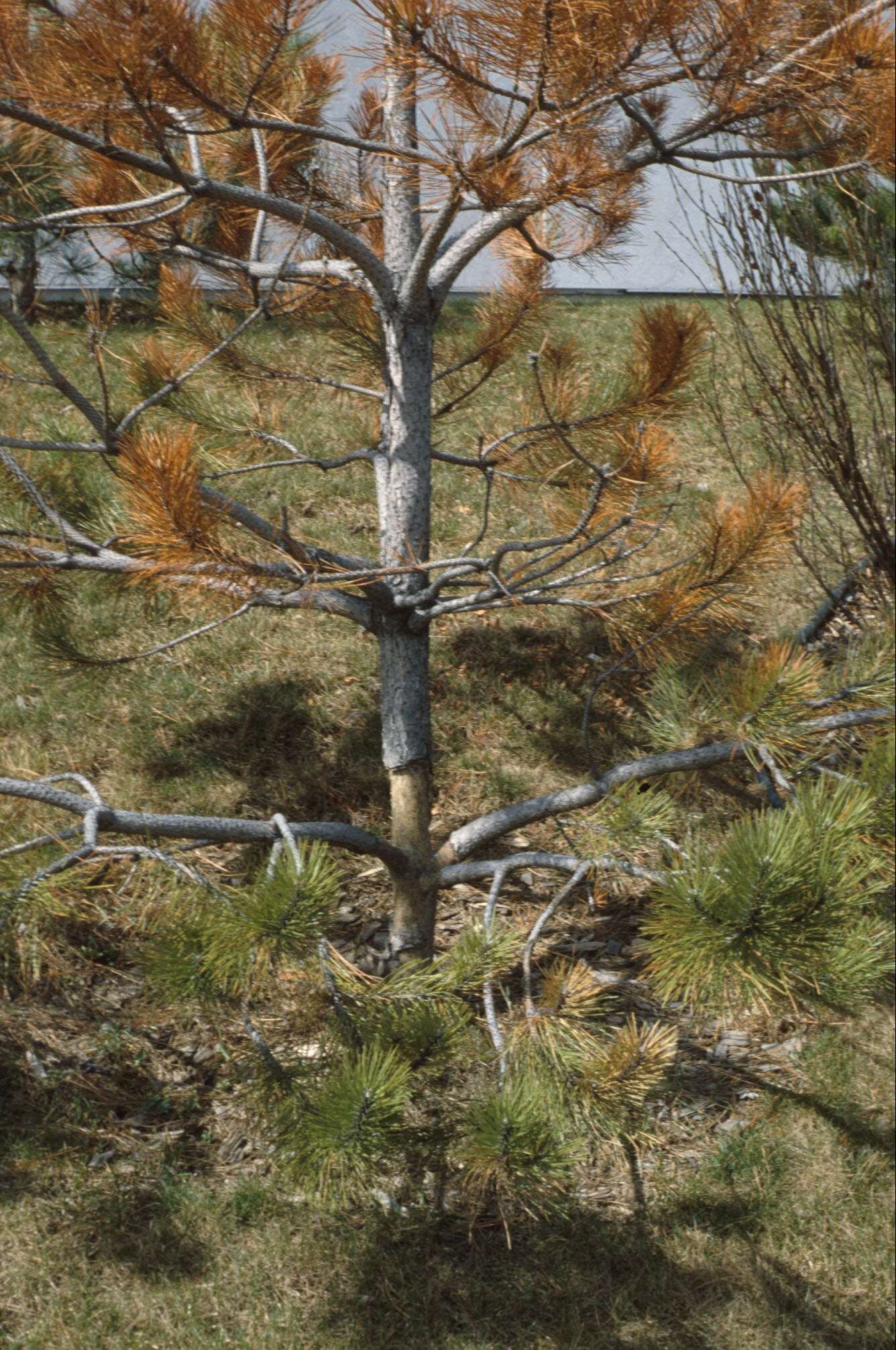
Bark from an immature red pine (Pinus resinosa) notched by a meadow vole (Microtus pennsylvanicus).
André Carpentier

Bark stripped from an ornamental planting of Norway maple (Acer platanoides) by a meadow vole (Microtus pennsylvanicus).
André Carpentier
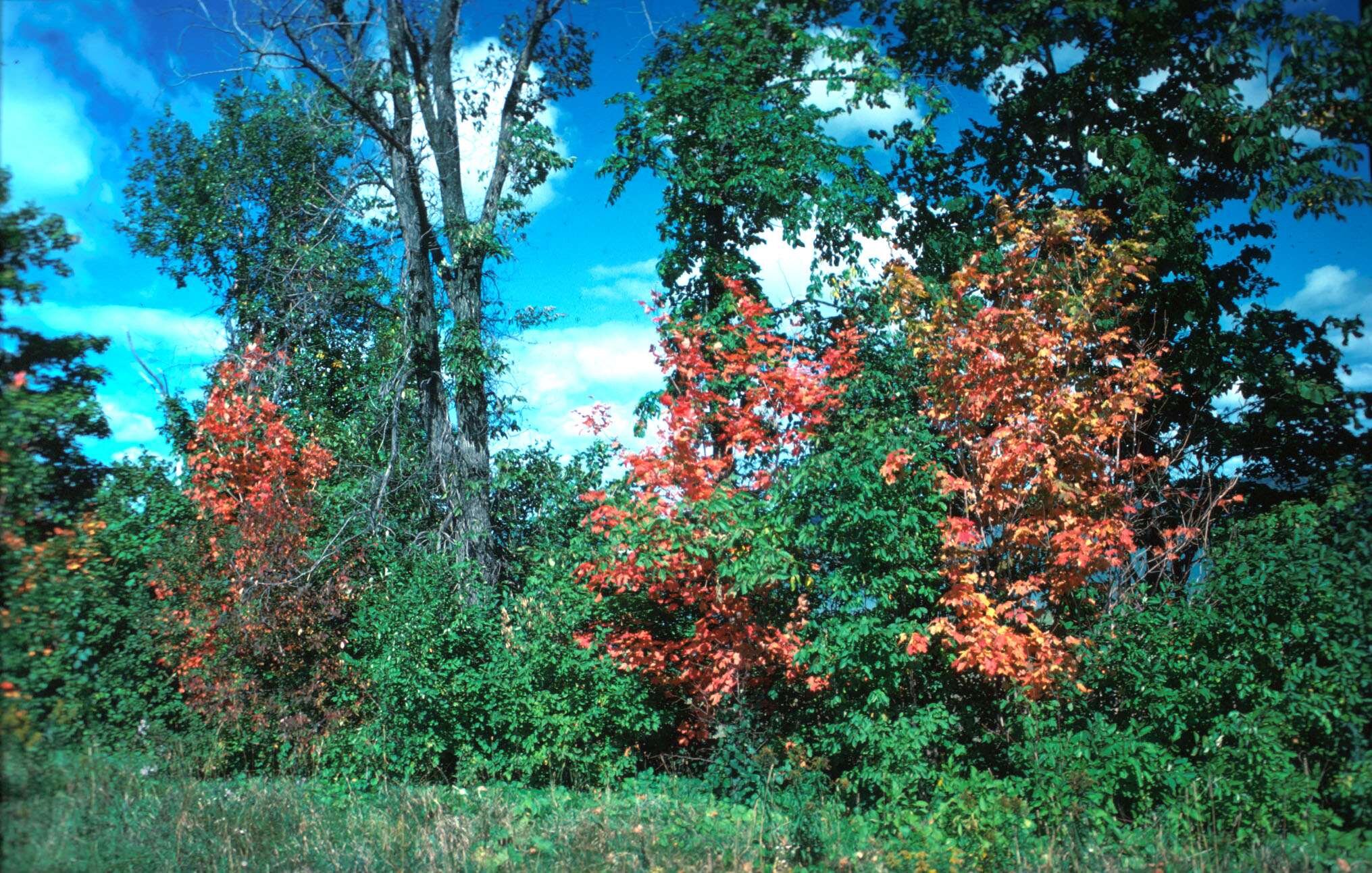
Multiple young broadleaf trees along a field fence-line killed by meadow voles (Microtus pennsylvanicus).
Claude Moffet
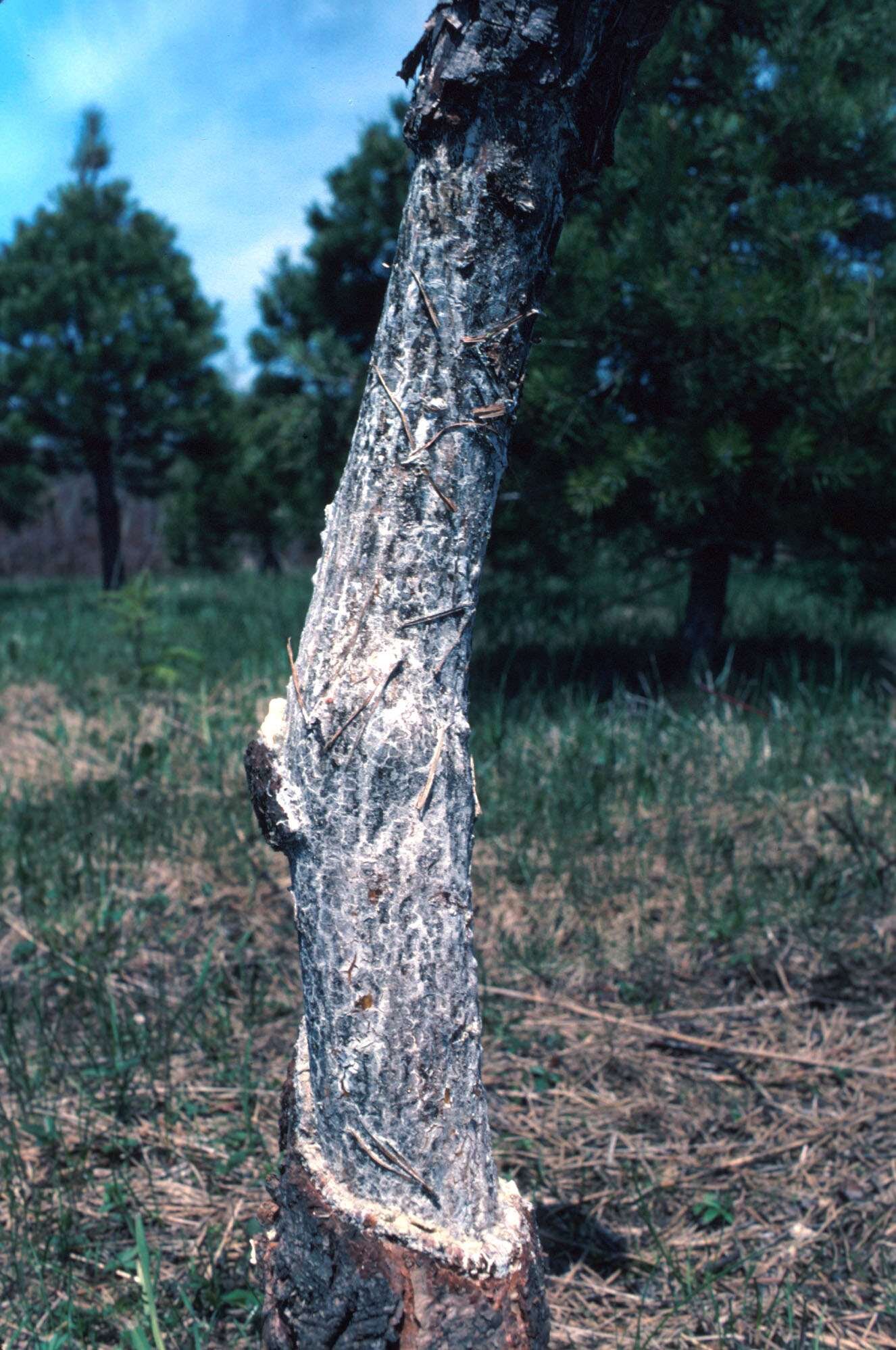
A Scots pine (Pinus sylvestris) Christmas tree where a meadow vole (Microtus pennsylvanicus) has stripped the bark near the tree’s base.
André Carpentier
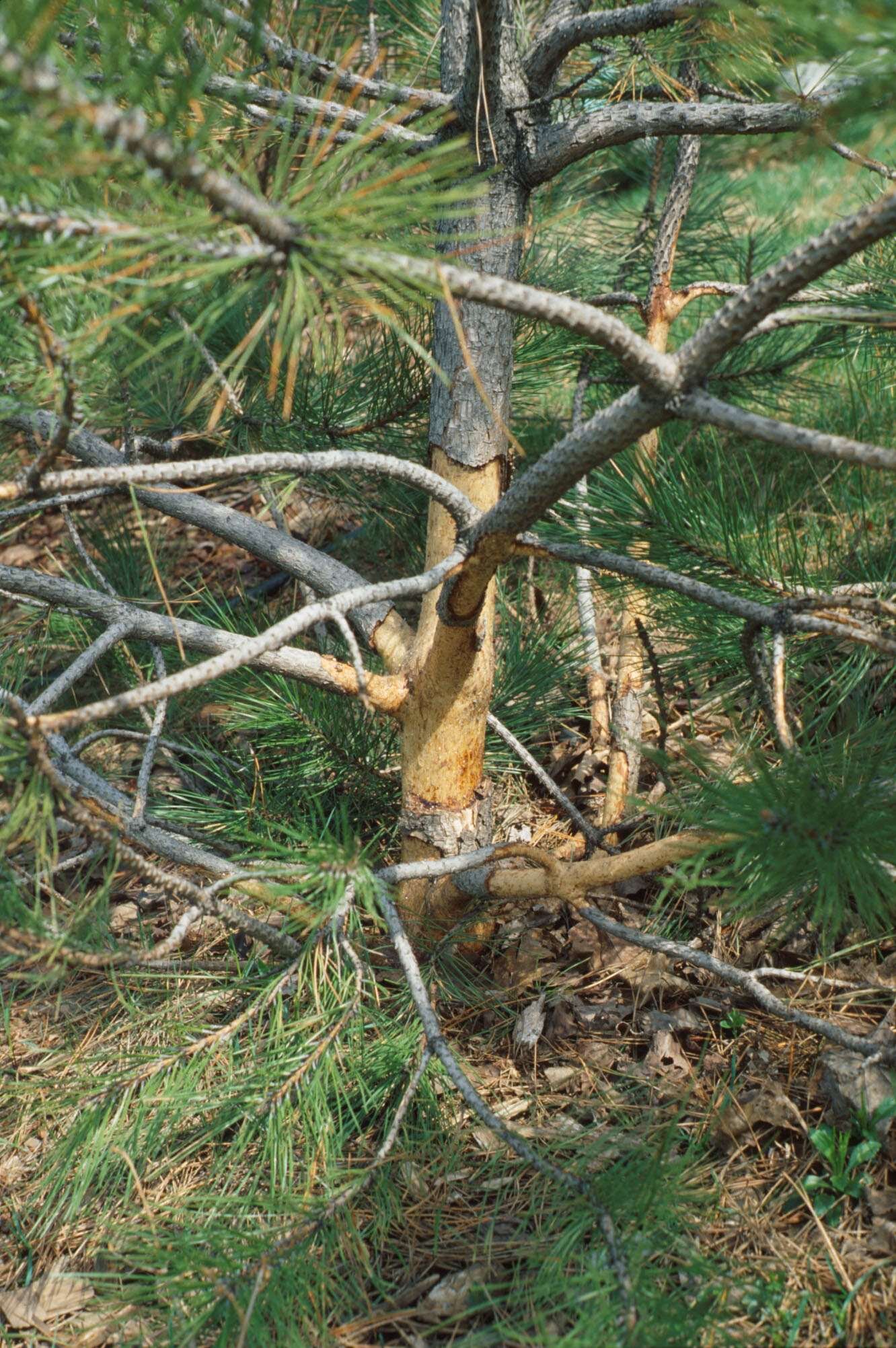
A young red pine (Pinus resinosa) with bark stripped by a meadow vole (Microtus pennsylvanicus).
André Carpentier
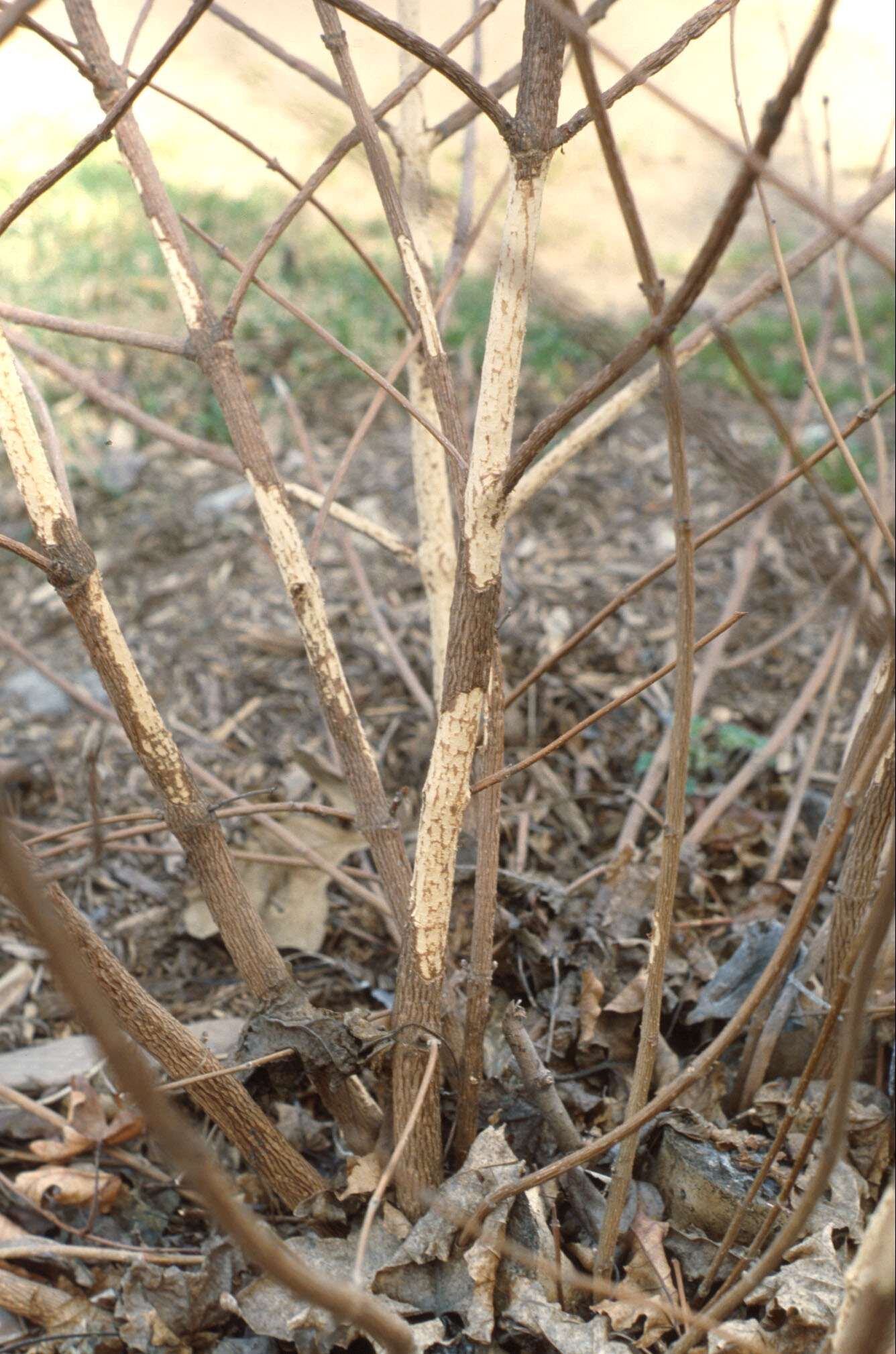
Common lilac with bark stripped by a meadow vole (Microtus pennsylvanicus).
André Carpentier

Meadow vole (Microtus pennsylvanicus).
iStock.com/Karel Bock
Selected references
Agriculture Agri-Food Canada. 2020. Protecting trees from animal damage. Available at: https://agriculture.canada.ca/en/agricultural-production/crop-protection/diseases-and-pests-agroforestry/protecting-trees-animal-damage [Accessed March 2024]
Burleigh, J.T.; Ebata, T.; White, K.J.; Rusch, D.; Kope, H., editors. 2014. Field guide to forest damage in British Columbia (3rd edition). Crown Publications, Province of British Columbia. Victoria, British Columbia. Joint publication No.17. 38 p.
Gill, R.M.A. 1992. A review of damage by mammals in north temperate forests: 2. Small mammals. Forestry 65(3): 281–308. https://doi.org/10.1093/forestry/65.3.281
Huitu, O.; Kiljunen, N.; Korpimäki, E.; Koskela, E.; Mappes, T.; Pietiäinen, H.; Pӧysä, H.; Henttonen, H. 2009. Density-dependent vole damage in silviculture and associated economic losses at a nationwide scale. Forest Ecology and Management 258(7): 1219–1224. https://doi.org/10.1016/j.foreco.2009.06.013
Internet Center for Wildlife Damage Management. 2024. Identifying wildlife damage to trees, shrubs, & bushes. Available at: https://icwdm.org/identification/inspection/outdoors/trees/ [Accessed March 2024]
Sullivan, T.P.; Sullivan, D.S. 2008. Vole-feeding damage and forest plantation protection: large- scale application of diversionary food to reduce damage to newly planted trees. Crop Protection 27(3–5): 775–784. http://dx.doi.org/10.1016/j.cropro.2007.11.003
Sullivan, T.P.; Sullivan, D.S. 2010. Forecasting vole population outbreaks in forest plantations: the rise and fall of a major mammalian pest. Forest Ecology and Management 260(6): 983–993. https://doi.org/10.1016/j.foreco.2010.06.017
Sullivan, T.P.; Sullivan, D.S. 2018. Long-tailed vole (Microtus longicaudus) population outbreaks and refugia after clearcutting of coniferous forests: the search for fluctuations and hotspots. Crop Protection 112: 49–55. http://dx.doi.org/10.1016/j.cropro.2018.05.008
Cite this fact sheet
Callan, B.E. 2025. Vole damage. In J.P. Brandt, B.I. Daigle, J.-L. St-Germain, A.C. Skinner, B.C. Callan, and V.G. Nealis, editors. Trees, insects, mites, and diseases of Canada’s forests. Natural Resources Canada, Canadian Forest Service, Headquarters. Ottawa, Ontario.Page details
- Date modified: