
Ungulate (bison, deer, elk, and moose) damage

Cause and general information
Ungulates are large mammals with hooves. They are most damaging to conifers and broadleaf trees where their natural predators—wolves and coyotes—are absent or occur at low population levels. Ungulates cause damage by chewing young shoots and branches of trees. They also wound bark on tree trunks by scraping it with their incisors and rubbing it with their antlers. Tree seedlings are consumed when they browse ground vegetation. Deer (Odocoileus) can become a nuisance in areas where populations migrate into urban areas, and cause feeding damage to ornamental plantings, gardens, and orchards. Moose (Alces alces L.) have caused landscape-level damage to trees and shrubs on the island of Newfoundland (where they were introduced more than 100 years ago) because their population is unchecked due to a lack of predators. Similarly, white-tailed deer (O. virginianus [Zimmermann]) were introduced to Anticosti Island, Quebec, and have also had a dramatic effect on forests and other vegetation. Wood bison (Bison bison subsp. athabascae [Rhoads]) and plains bison (B. bison subsp. bison L.) feed mainly on grasses and sedges but will also browse broadleaf shrubs and regenerating hardwoods.
Distribution and species affected
In Canada, the ungulates causing damage to forest trees and shrubs are mainly deer, elk, and moose, members of the animal family Cervidae.
Elk, also known as wapiti (Cervus canadensis Erxleben), have distribution ranges that are more limited. Their herds are found in the Yukon, the Rocky Mountains in British Columbia, and Alberta (park areas near Banff and Jasper). Small herds can also be found in Manitoba and Saskatchewan. Elk have also been re-introduced at several locations in Ontario (after having been extirpated in the late 1800s), producing populations that have persisted for more than 20 years. Elk prefer to eat grasses and herbaceous plants but will eat branches and twigs of broadleaf trees and conifers in winter if the snow is too deep to find other food.
Deer are the most prolific ungulate in Canada. White-tailed deer occur in forests and brushlands in every province and territory. Rocky Mountain mule deer (O. hemionus [Rafinesque] subsp. hemionus) have a smaller distribution range, which overlaps with that of white-tailed deer in the Yukon, British Columbia, Alberta, and western Saskatchewan. Two other subspecies of O. hemionus occur in British Columbia: (1) Columbian blacktail deer (subsp. columbianus [Richardson]) on the south coast and (2) Sitka deer (subsp. sitkensis [Merriam]) on the north coast. They feed on all species of trees but prefer maple (Acer) and aspen and poplar (Populus) species.
Moose occur in wooded areas throughout Canada except for coastal regions of British Columbia. They were introduced to the island of Newfoundland more than a century ago. Moose prefer balsam fir (Abies balsamea), birch (Betula), maple, poplar, red osier dogwood (Cornus sericea), and plants found in and near water.
Wood bison and plains bison are ungulates belonging to the family Bovidae that can be found in western Canada. Populations of both sub-species are low and very limited in extent, but they do feed on broadleaf trees and shrubs, particularly in winter. Bison have been implicated in restricting the extent of aspen parkland at the ecotone between grasslands and continuous forests on the Canadian Prairies before the populations decreased precipitously in the late 1800s.
Tree parts affected
Trunks, branches, shoots, foliage, saplings, and seedlings
Symptoms and signs
All ungulates cause similar signs of feeding on shoots and small branches, which are chewed and pulled off, leaving a squared, ragged, or splintered end. This is different in appearance from rabbit and hare damage, which leaves neat, angled cuts on branches, and vole feeding damage on bark, which has a “fuzzy” appearance. Symptoms of heavy repeated ungulate browsing over several years on young trees and shrubs include stunting, proliferation of branches, and short stems. Tree seedlings can be pulled completely out of the ground during browsing, and moose can pull down saplings up to 3 metres in height to browse on foliage and twigs, snapping off their tops in the process.
Deer, elk, and moose all cause patches of damaged bark on the lower trunk and lower branches of trees, either by feeding or by rubbing antlers. The bark is stripped during feeding by the upward scraping of the lower incisor teeth, which leave two parallel, vertical grooves. The feeding damage is usually not so extensive that the trees are girdled. Deer tooth marks are about 4 millimetres wide, while elk marks are 6 millimetres wide, and moose leave the largest marks at 6 to 9 millimetres wide.
In the autumn, male deer, elk, and moose rub their antlers upwards on the bark of saplings to polish them and leave signs of their presence for females. This shreds the bark, and larger animals also break branches during this activity. The resulting bark wounds are ragged with some strips of bark still attached at the upper point. Some of the polishing wounds may look like claw wounds, but bear claw marks are usually formed by downward gouging rather than upward movements, with remaining bark strips attached at the bottom.
Damage
Feeding damage to tree trunks, branches, and twigs is highest during winter months, when other sources of food are scarce. New stands of regenerating broadleaf trees, especially aspen and willow (Salix) are particularly vulnerable to grazing moose, who will chew them down to stubs less than a meter in height.
In urban areas with nearby high deer populations, feeding damage can occur year-round on ornamental and orchard trees and shrubs and hedges. As well, in deer wintering areas, and forested areas where white-tailed deer exist at very high densities during summer, understory vegetation density can be very low because of continual browsing of woody shrubs and forbs, resulting in death of the plants and/or inability of the plants to regenerate. Heavy browsing can also result in shifts in species composition to higher proportions of plant species that are not favoured by deer compared with less heavily browsed species.
On the island of Newfoundland, heavy browsing by moose has significantly changed forest ecosystems, in some areas converting them to shrub barrens or meadows and eliminating conifer species such as balsam fir. Repeated cropping of branches and twigs of saplings of deciduous trees slows down canopy closure and reduces their height. It also prevents the trees from flowering and producing seed when new shoots are repeatedly chewed off. Balsam fir is a preferred conifer food and winter browsing can also slow down canopy closure or kill young trees. Because the region has no wolves, the population can grow unchecked by its natural predator.
Prevention and management
Small areas such as orchards and yards can be protected from deer by wire mesh fences at least 2.4 metres high or by electric fences with five strands (the first strand 25 centimetres from the ground and the remaining strands 30 centimetres apart). Planting another food source nearby such as winter wheat may divert ungulates to feed upon them instead of the trees but may also attract them to the area.
In some circumstances, population control through permitted hunting of certain species (e.g., moose on the island of Newfoundland) is warranted to protect ecosystems from damage.
Photos
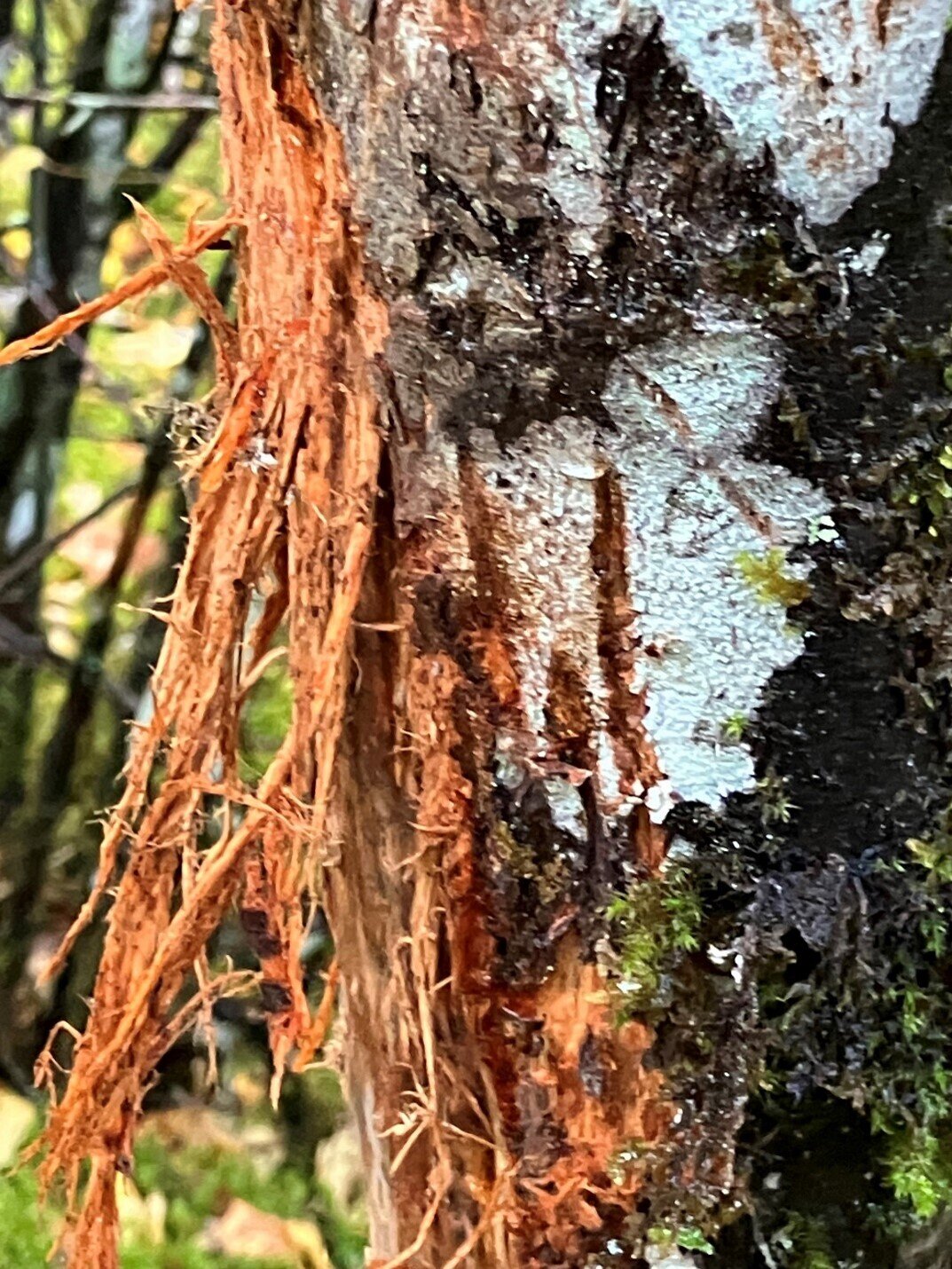
Columbian blacktail deer (Odocoileus hemionus subsp. columbianus) damage to a tree.
Brenda Callan
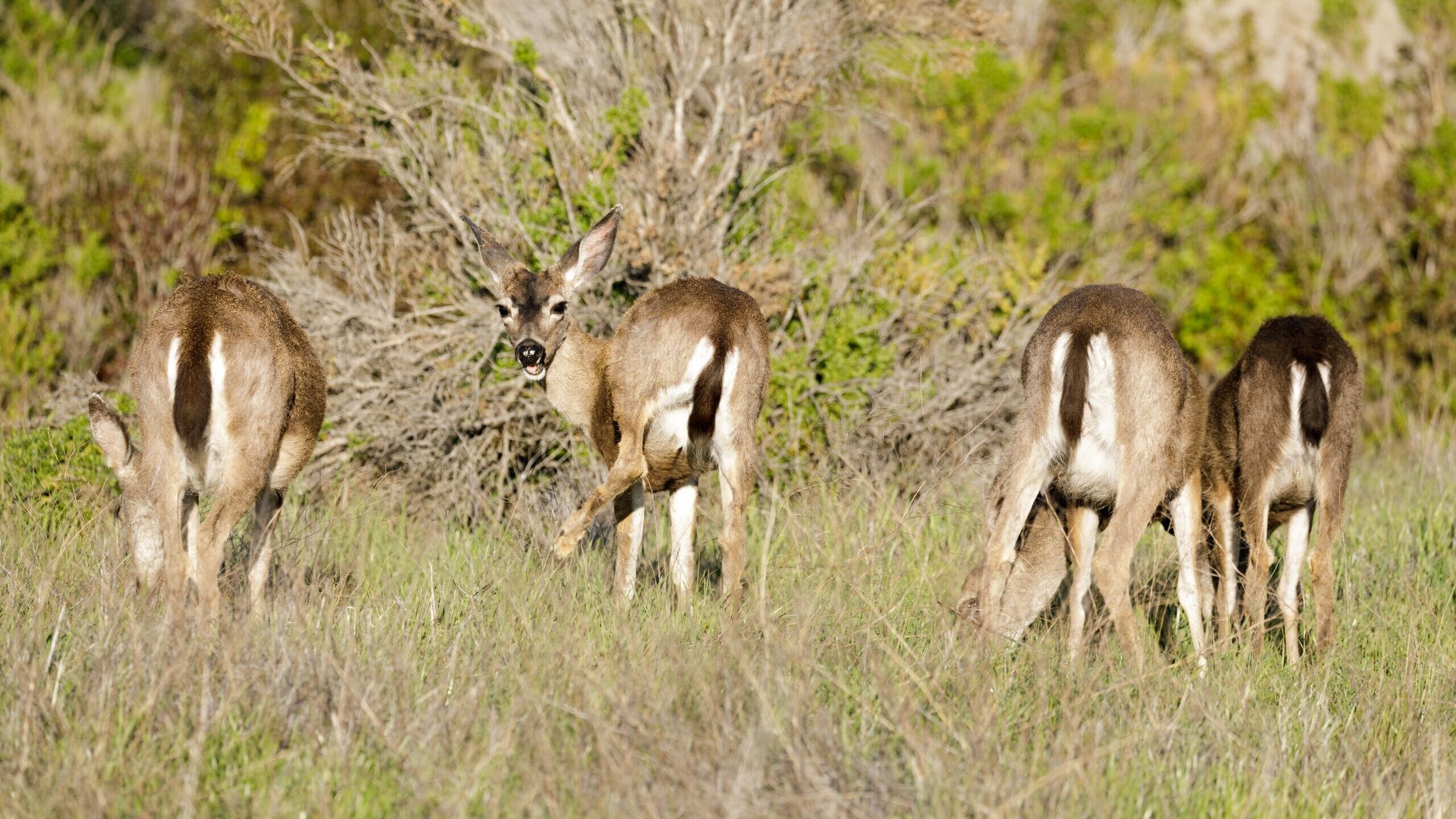
Columbian blacktail deer (Odocoileus hemionus subsp. columbianus).
iStock.com/yhelfman
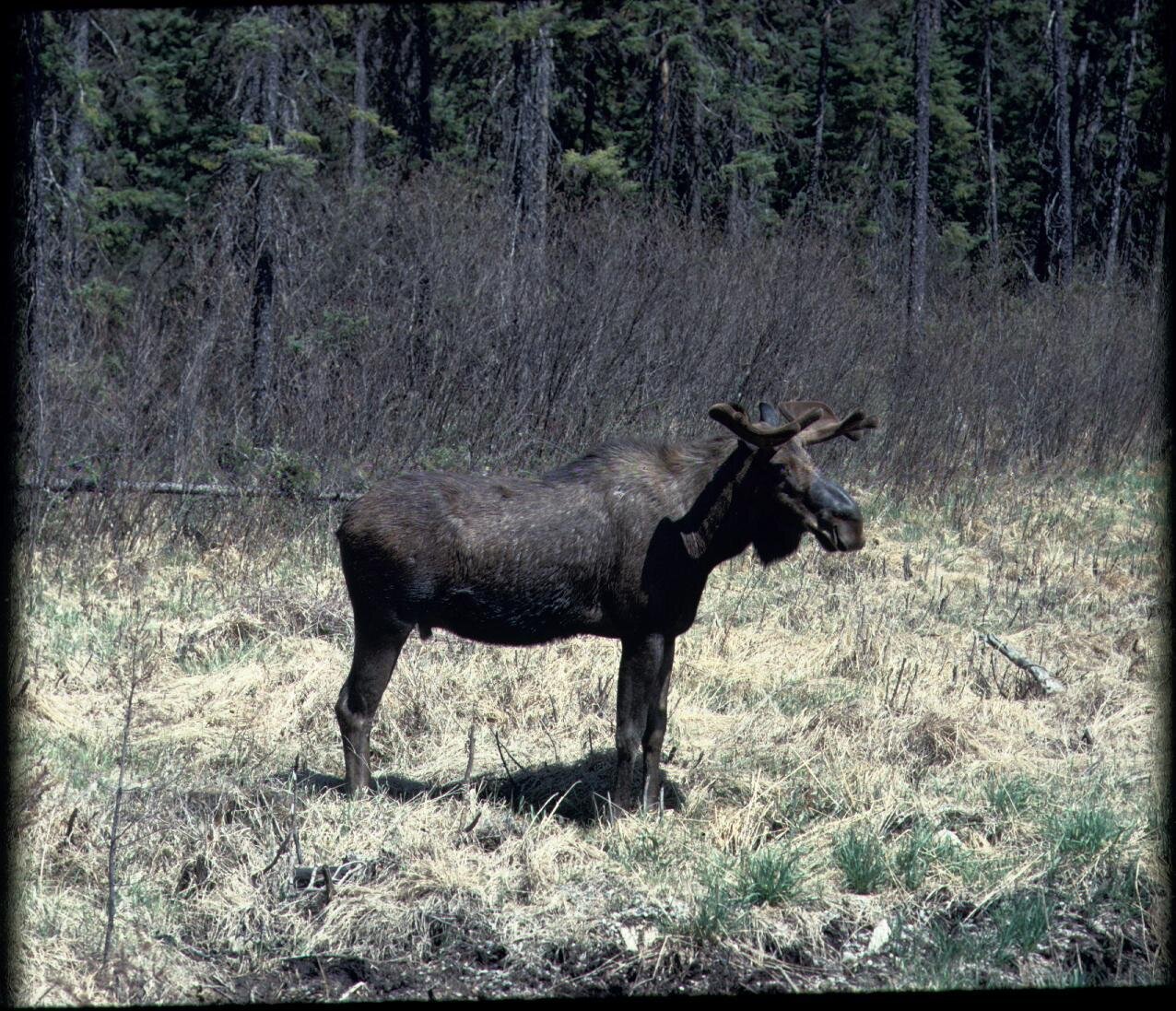
Moose (Alces alces).
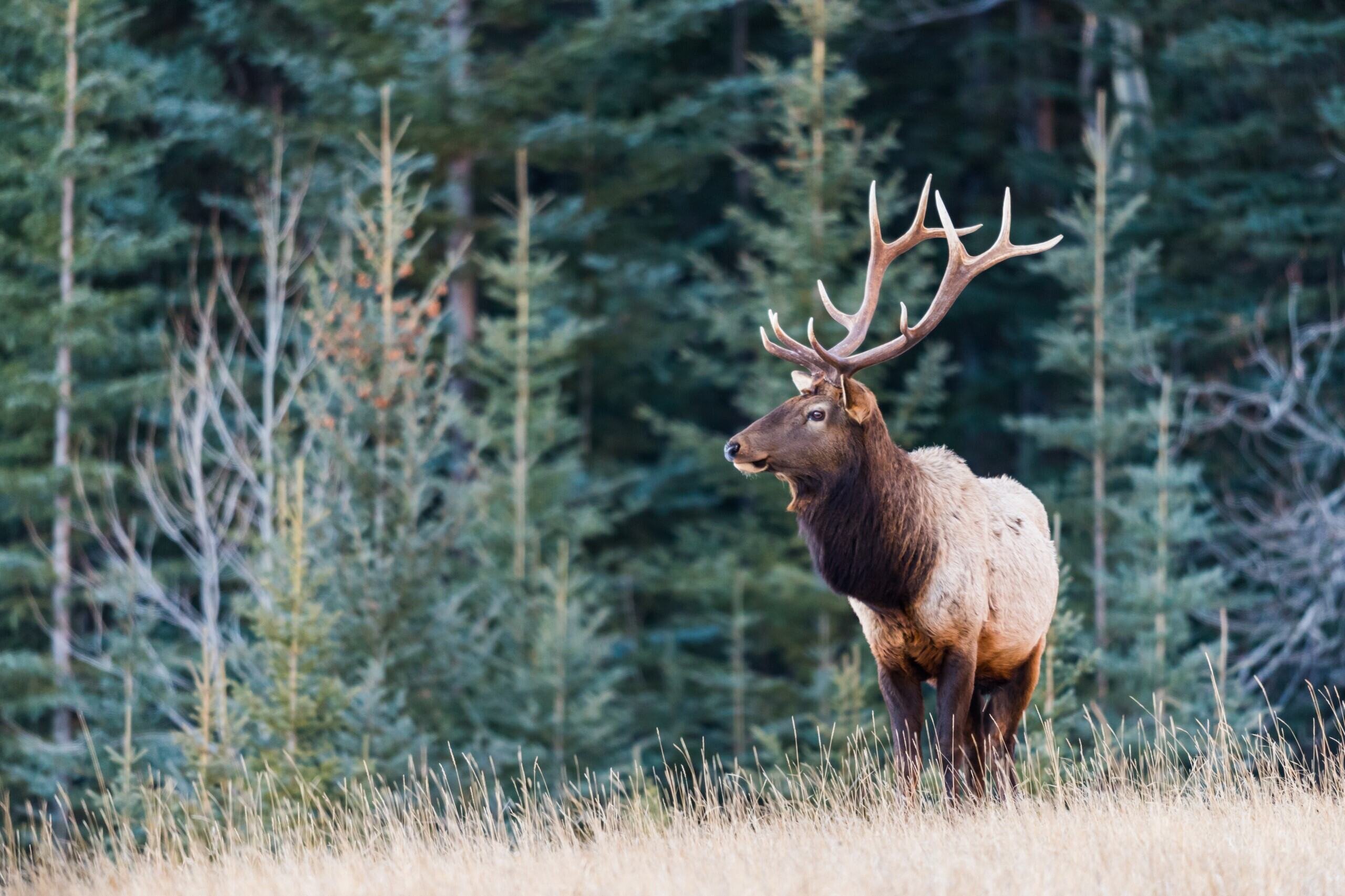
Elk or wapiti (Cervus canadensis).
iStock.com/bgsmith
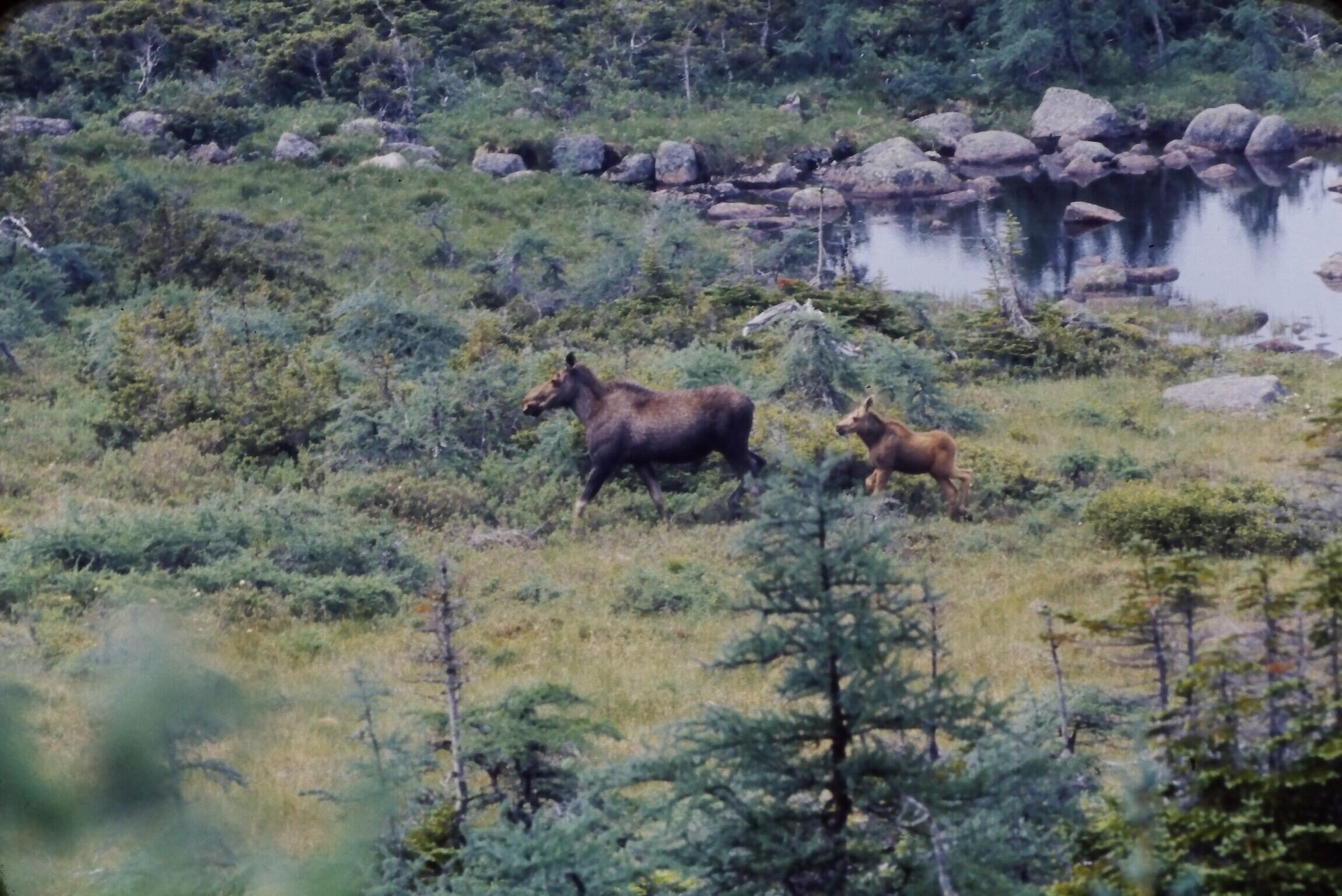
Female moose ((Alces alces) with young calf.
Wallace R. Skinner
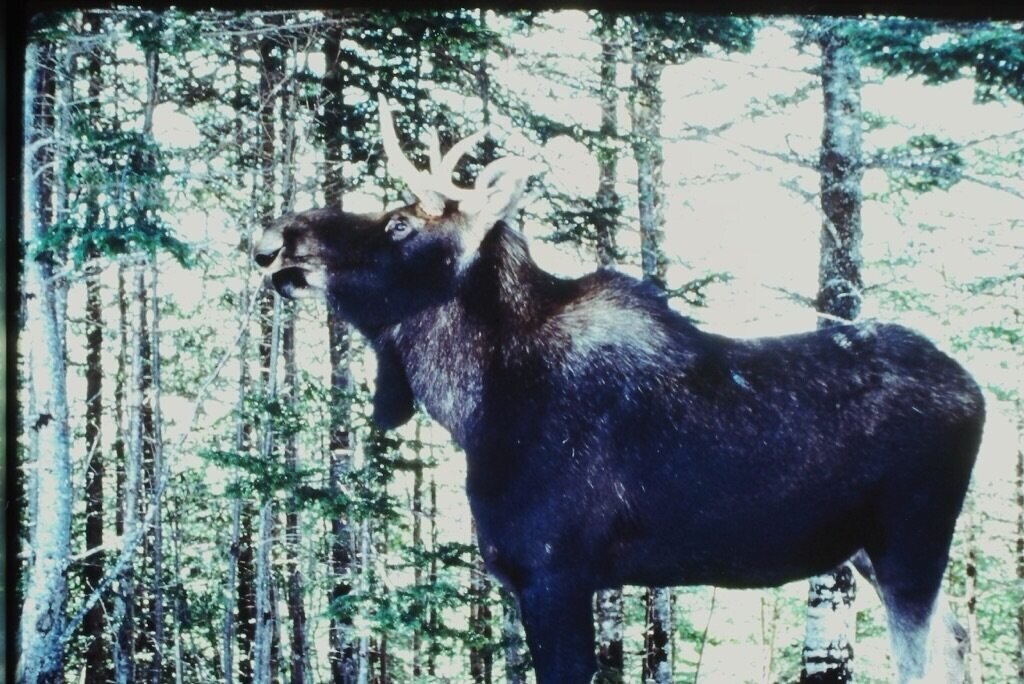
Moose (Alces alces) feeding on balsam fir (Abies balsamea) branches.
Wallace R. Skinner
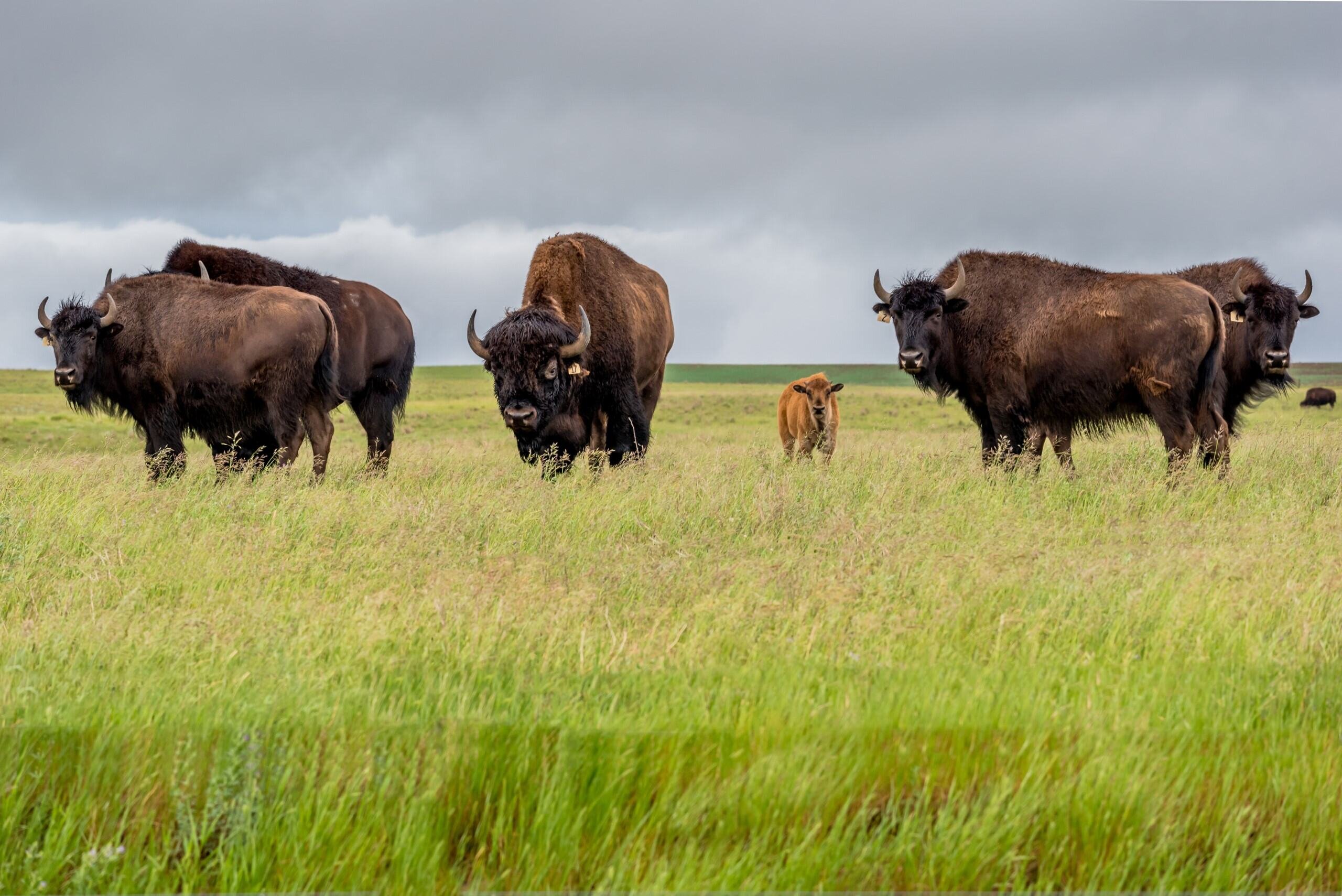
Plains bison (Bison bison subsp. bison).
iStock.com/Nancy Anderson
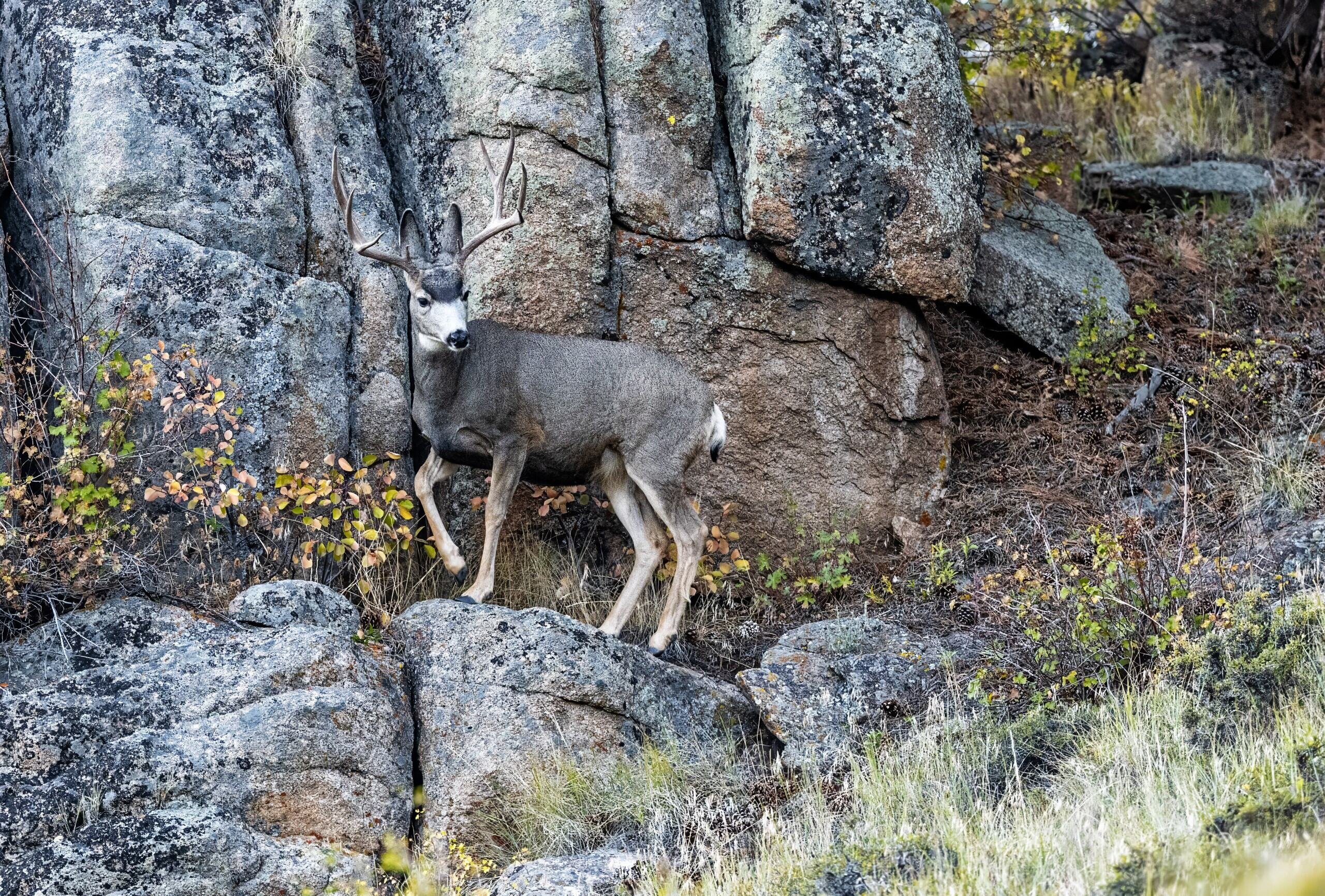
Rocky Mountain mule deer (Odocoileus hemionus subsp. hemionus).
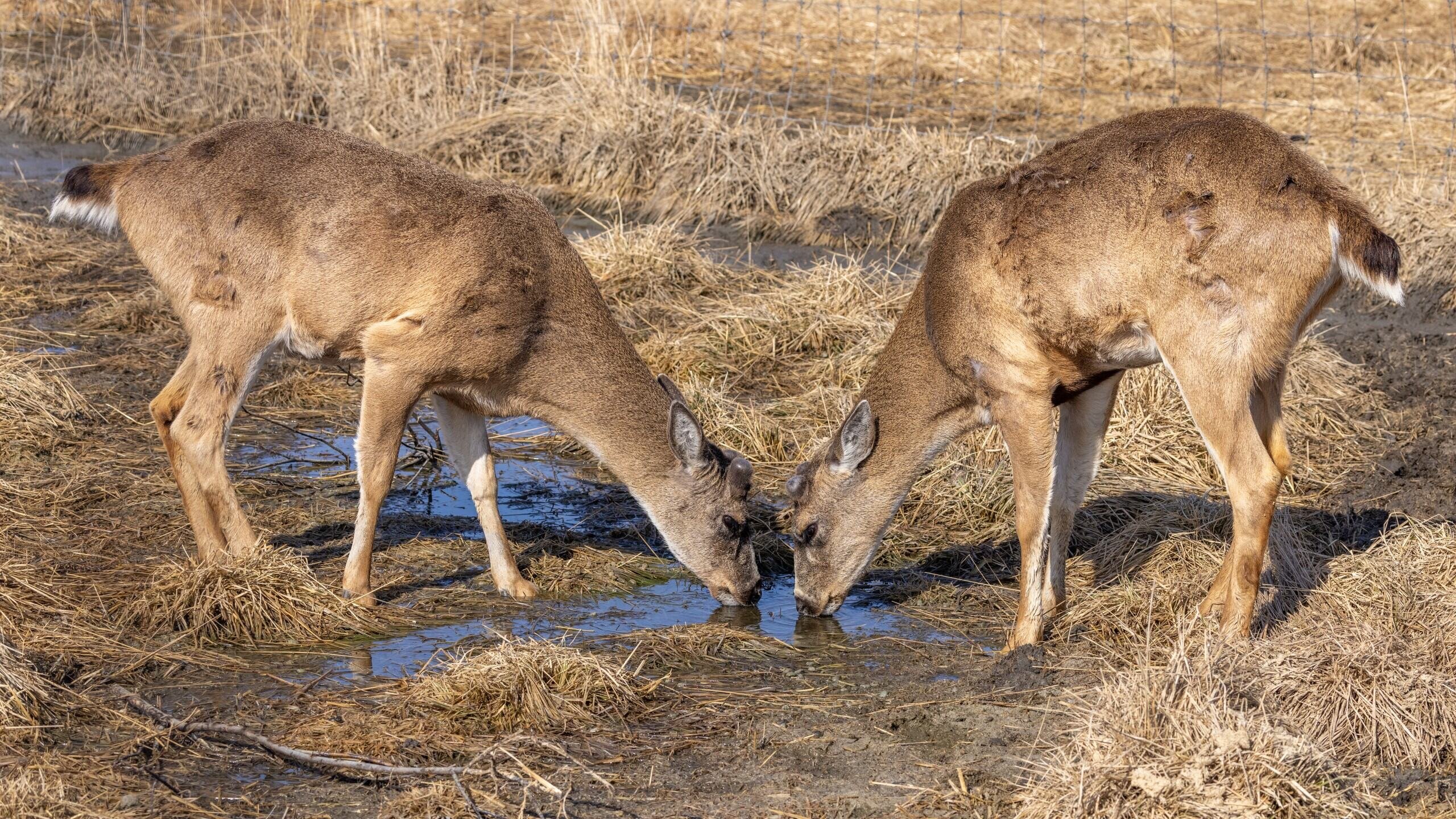
Sitka deer (Odocoileus hemionus subsp. sitkensis).
iStock.com/Dee Carpenter Photography
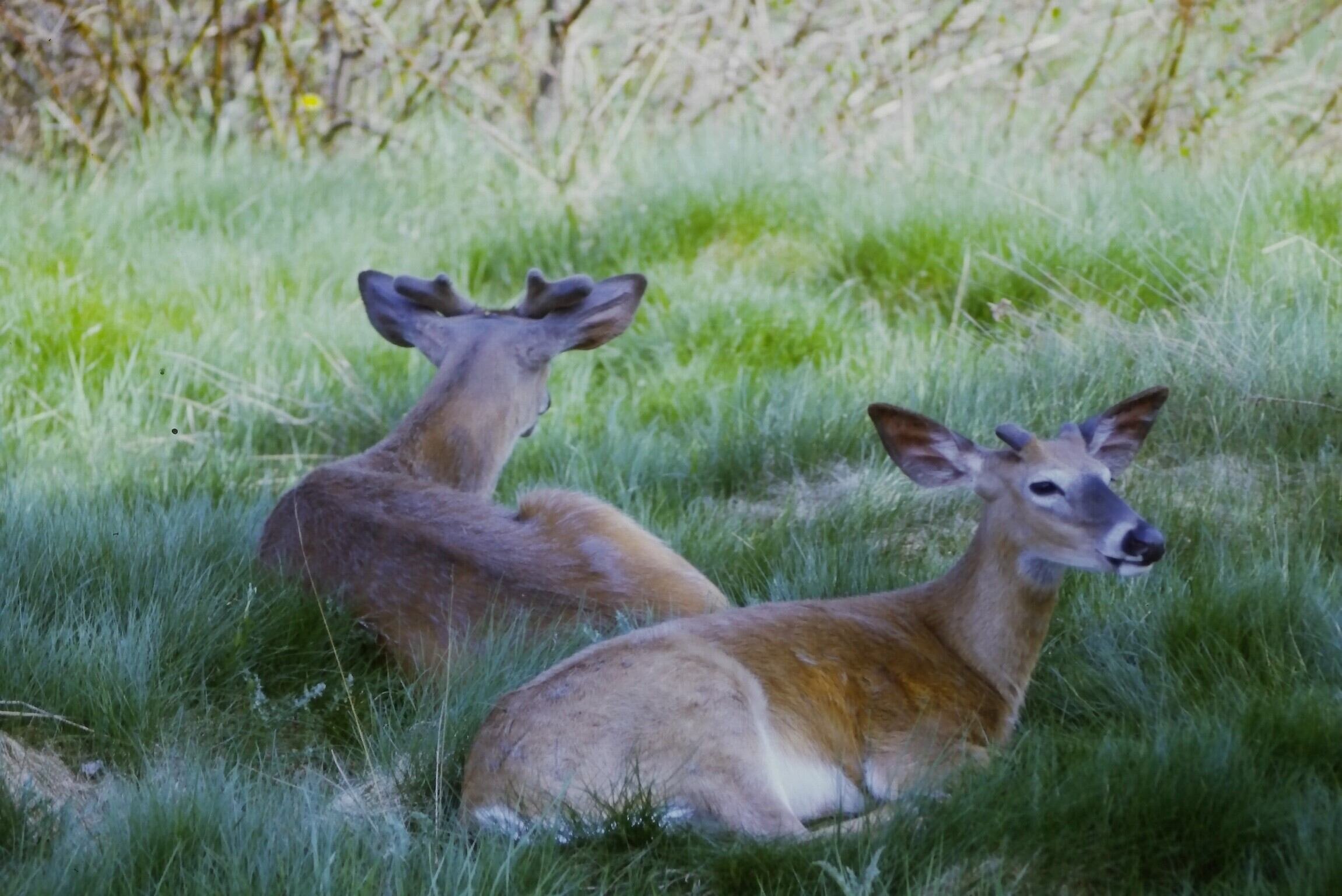
Resting white-tailed deer (Odocoileus virginianus).
Wallace R. Skinner
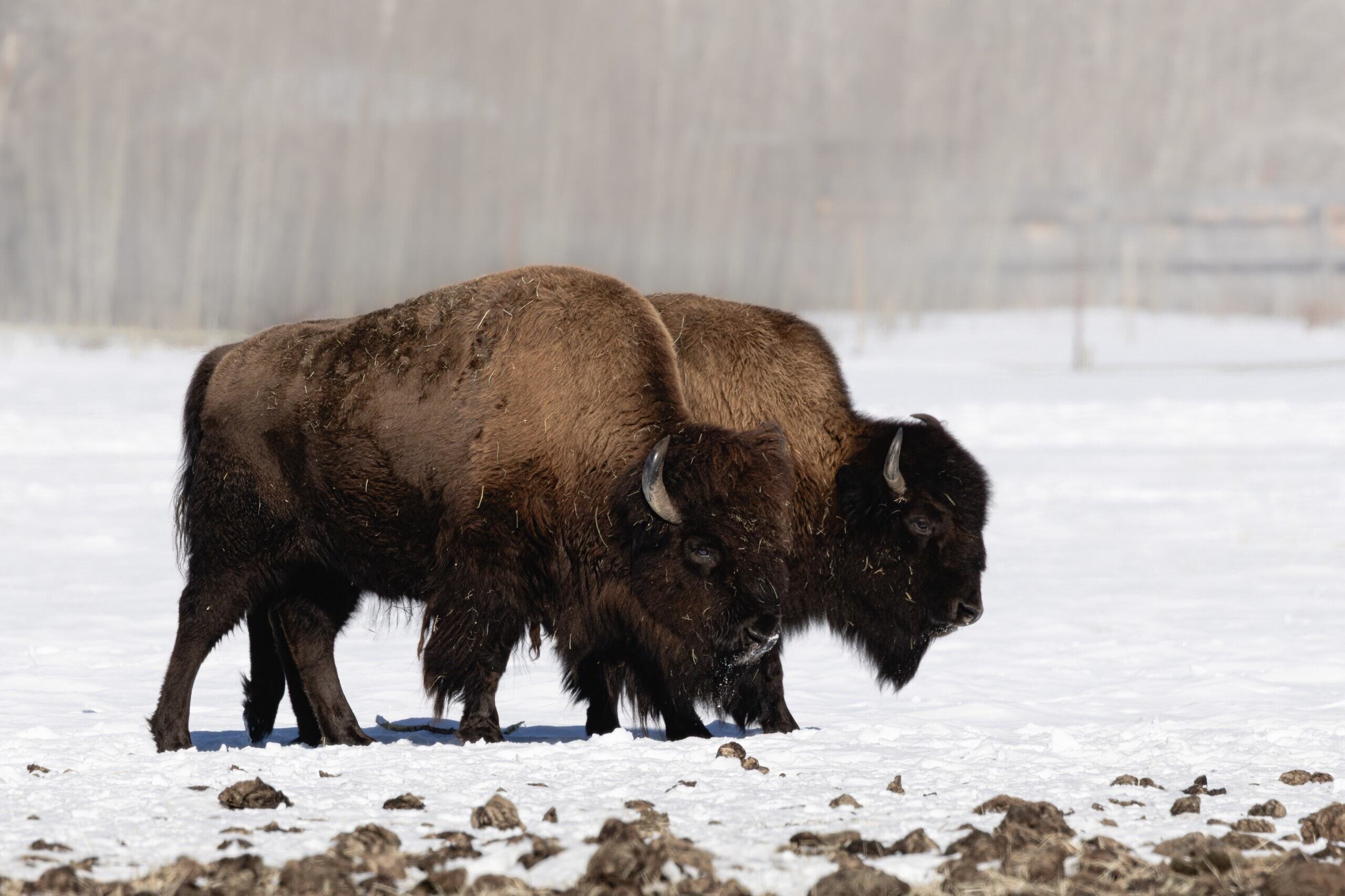
Wood bison (Bison bison subsp. athabascae).
iStock.com/Samuel Choy
Selected references
Agriculture and Agri-Food Canada. 2020. Protecting trees from animal damage. Available at: https://agriculture.canada.ca/en/agricultural-production/crop-protection/diseases-and-pests-agroforestry/protecting-trees-animal-damage [Accessed March 2023]
Burleigh, J.T.; Ebata, T.; White, K.J.; Rusch, D.; Kope, H., editors. 2014. Field guide to forest damage in British Columbia (3rd edition). Crown Publications, Province of British Columbia. Victoria, British Columbia. Joint publication No.17. 368 p.
Campbell, C.; Campbell, I.D.; Blyth, C.B.; McAndrews, J.H. 1994. Bison extirpation may have caused aspen expansion in western Canada. Ecography 17(4):360–362. http://www.jstor.org/stable/3683364
Canadian Wildlife Federation and Environment and Climate Change Canada. Hinterland Who’s Who: Moose. Available at: https://www.hww.ca/en/wildlife/mammals/moose.html [Accessed March 2024]
Canadian Wildlife Federation and Environment and Climate Change Canada. Hinterland Who’s Who: North American bison. Available at: https://www.hww.ca/wildlife/mammals/north-american-bison/ [Accessed March 2024]
Canadian Wildlife Federation and Environment and Climate Change Canada. Hinterland Who’s Who: North American elk. Available at: https://www.hww.ca/wildlife/mammals/north-american-elk/ [Accessed March 2024]
Canadian Wildlife Federation and Environment and Climate Change Canada. Hinterland Who’s Who: White-tailed deer. Available at: https://www.hww.ca/en/wildlife/mammals/white-tailed-deer.html [Accessed March 2024]
Crȇte, M.; Ouellet, J.-P.; Lesage, L. 2001. Comparative effects on plants of caribou/reindeer, moose and white-tailed deer herbivory. Arctic 54(4): 407–417. https://journalhosting.ucalgary.ca/index.php/arctic/article/view/63854/47789
Gill, R.M.A. 1992. A review of damage by mammals in north temperate forests: 1. Deer. Forestry 65(2): 145–169. https://doi.org/10.1093/forestry/65.2.145
Harestad, A.S.; Bunnell, F.L.; Sullivan, T.P.; Andrusiak, L. 1986. Key to injury of conifer trees by wildlife in British Columbia. British Columbia Ministry of Forests, Wildlife Habitat Research. Publication WHR-23. 38 p.
Internet Center for Wildlife Damage Management. 2024. Identifying wildlife damage to trees, shrubs, & bushes. Available at: https://icwdm.org/identification/inspection/outdoors/trees/ [Accessed March 2024]
Langor, D.W.; Cameron, E.K.; MacQuarrie, C.J.K.; McBeath, A.; McClay, A.; Peter, B.; Pybus, M.; Ramsfield, T.; Ryall, K.; Scarr, T.; Yemshanov, D.; DeMerchant, I.; Foottit, R.; Pohl, G.R. 2014. Non-native species in Canada’s boreal zone: diversity, impacts, and risk. Environmental Reviews 22(4): 372–420. https://doi.org/10.1139/er-2013-0083
White, S.; Zhu, X.; Meng, F.; Taylor, S.; Bourque, C.P.-A. 2021. Intensive moose browsing and small-scale domestic woodcutting impacts on forest successional trajectories in Gros Morne National Park, Canada. The Forestry Chronicle 97(3): 315–325. https://doi.org/10.5558/tfc2021-033
Cite this fact sheet
Callan, B.E. 2025. Ungulate (bison, deer, elk, and moose) damage. In J.P. Brandt, B.I. Daigle, J.-L. St-Germain, A.C. Skinner, B.C. Callan, and V.G. Nealis, editors. Trees, insects, mites, and diseases of Canada’s forests. Natural Resources Canada, Canadian Forest Service, Headquarters. Ottawa, Ontario.Page details
- Date modified: